

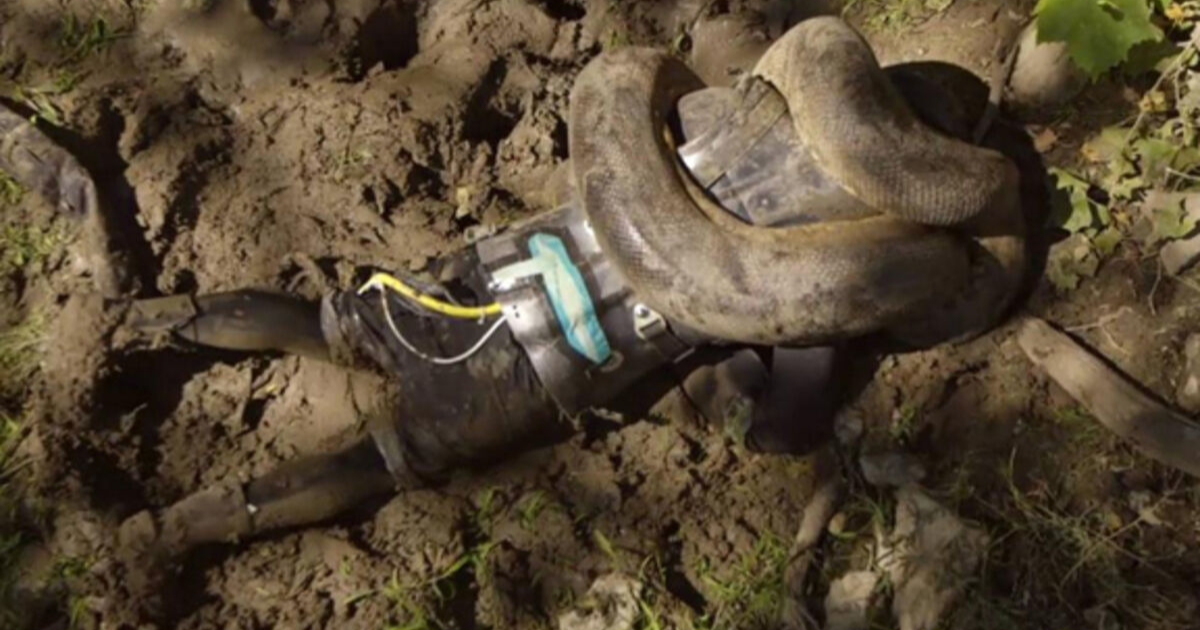
Paul Rosolie wore a custom protective suit and deliberately offered himself to a giant anaconda, but the experiment did not reach its planned ending
advertisement
Green anacondas are among the largest snakes on Earth and can swallow prey far wider than their own heads. Most people would take that information as a good reason to keep their distance. Conservationist Paul Rosolie went in the opposite direction and volunteered to find out what would happen if one tried to eat him.
The idea became the center of Discovery Channel's 2014 special Eaten Alive. Despite the title, Rosolie was never completely swallowed by the snake. The experiment reached the much more dangerous constriction stage before he decided that continuing could leave him seriously injured.
That distinction was lost in much of the promotion surrounding the show. Viewers were promised an extraordinary encounter between a man and a giant green anaconda, while Rosolie had a very different reason for agreeing to put himself in such an uncomfortable position.
Rosolie knew from years spent around large snakes that the stunt carried real risks. Even with a specially designed suit and a team watching nearby, nobody could fully control what a powerful wild animal would do once it wrapped around him.
His plan depended on the protective equipment keeping him safe long enough for the anaconda to begin swallowing him. Instead, the snake did what constrictors naturally do with potential prey: it wrapped itself around his body and squeezed.
That was where the experiment became much more real than the title of a television special. Rosolie had entered expecting an extreme encounter, but feeling the force of the snake around his body soon changed how far he was willing to take it.
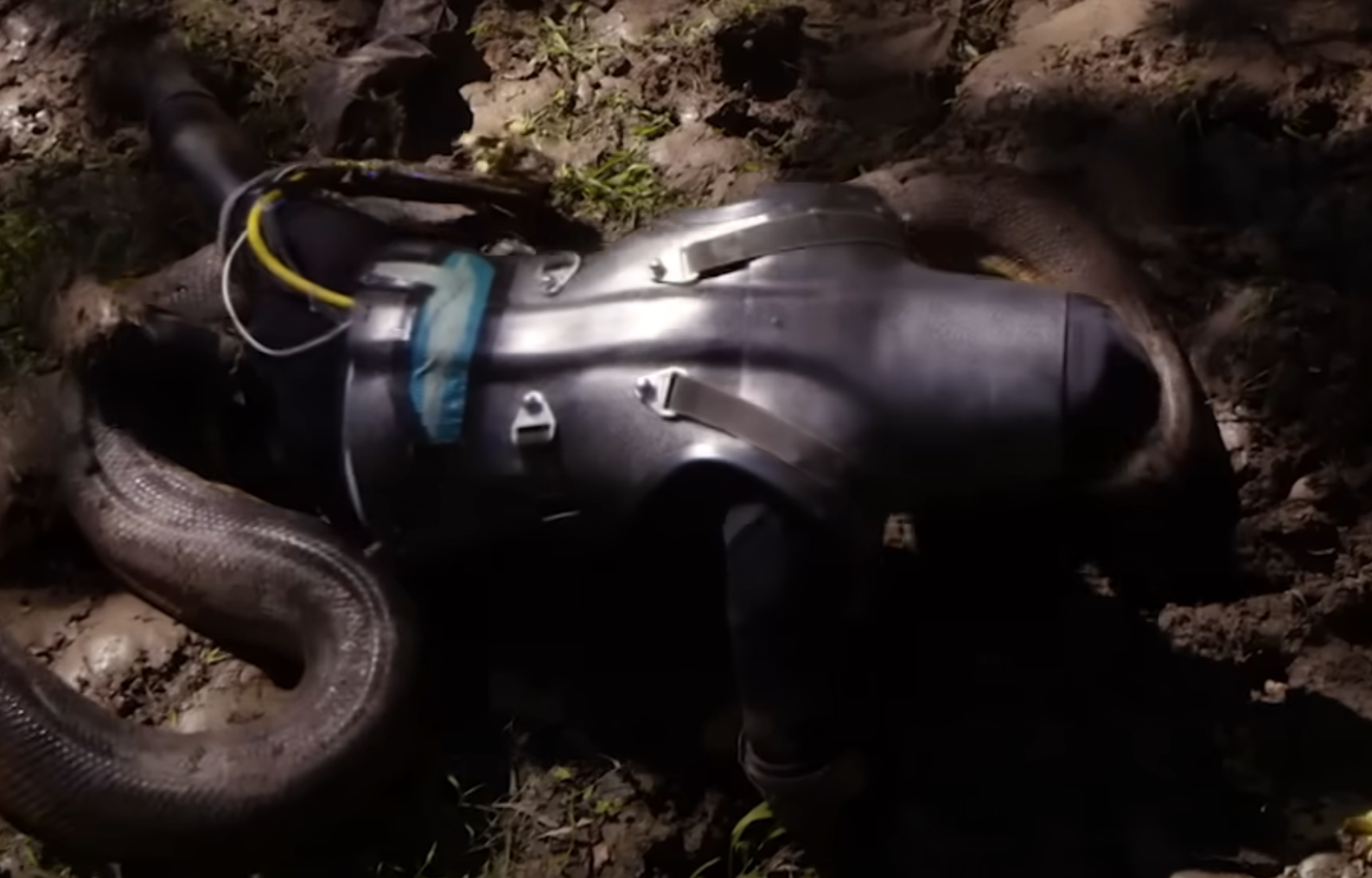
He was wearing a special outfit to stop the snake from crushing him to death
Discovery Channel
advertisement
The conservationist behind the anaconda stunt
Rosolie is an American naturalist, author and wildlife filmmaker whose work has focused on protecting threatened ecosystems. His expeditions have taken him through Brazil, India, Indonesia and Peru, often putting him close to wildlife most people would rather observe from a safe distance.
Much of his work has centered on the Peruvian Amazon, where he spent years studying animals including the green anaconda. His interest was not limited to getting dramatic footage of the snakes; he was also concerned about what was happening to the rainforest habitat around them.
That concern became the reason he agreed to Eaten Alive. Rosolie hoped that an outrageous television stunt would attract an audience large enough to make people pay attention to deforestation and the destruction of ecosystems supporting anacondas and countless other species.
It was certainly a more extreme approach to wildlife conservation than most presenters would consider.
David Attenborough, for example, has spent decades getting people interested in animals without ever volunteering to become lunch. Rosolie's idea depended on doing something so strange that people who might normally ignore a conservation documentary would want to watch.
The problem was obvious: once the phrase 'eaten alive by an anaconda' entered the promotion, the stunt itself became far easier to talk about than the rainforest Rosolie wanted people to notice.
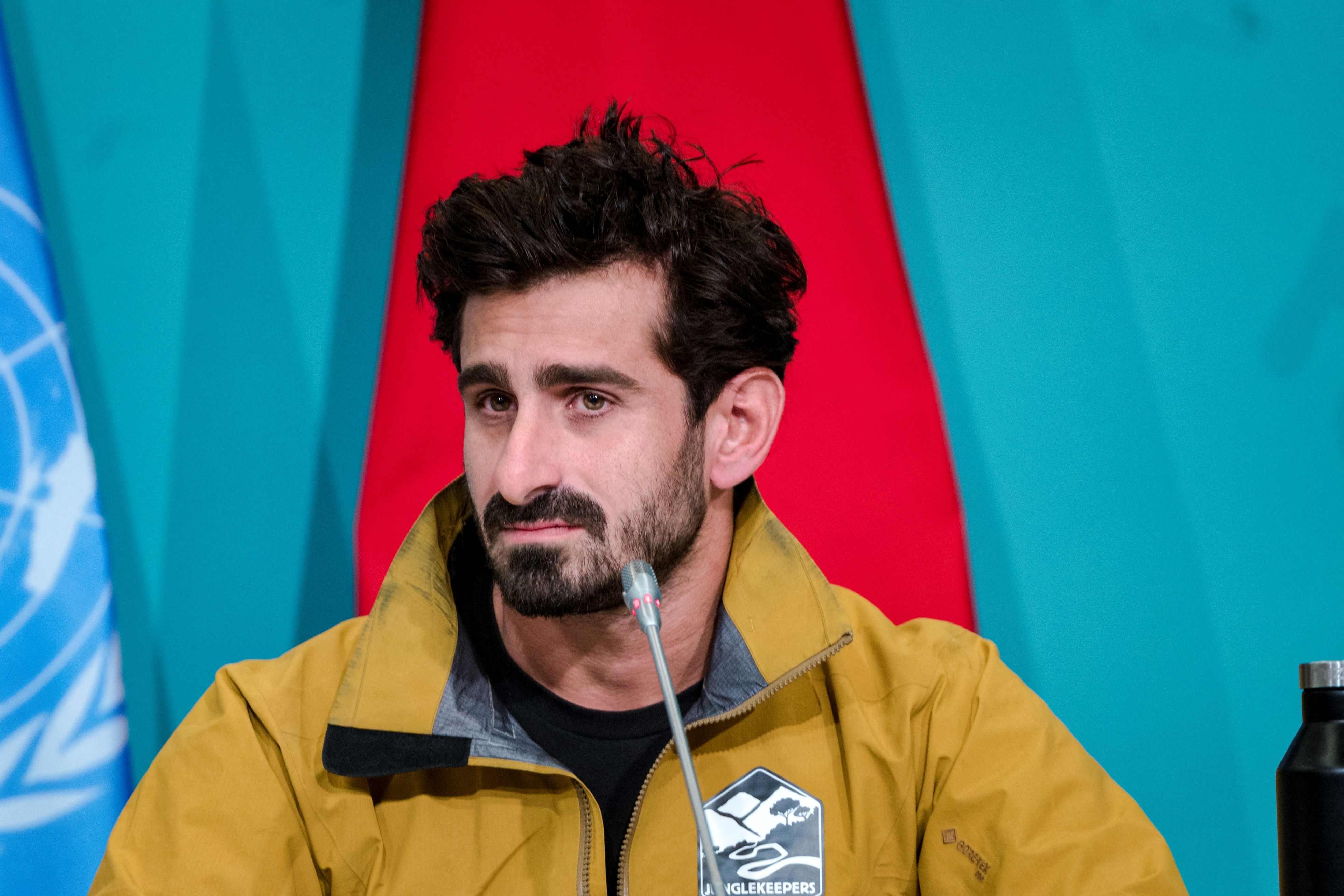
This is what Paul Rosolie normally looks like when he's not wearing his snake-proof uniform
ANDREJ IVANOV/AFP via Getty Images
advertisement
The real reason Paul Rosolie agreed to Eaten Alive
Rosolie's goal was to draw attention to the green anaconda and the destruction taking place in its Amazon habitat. He had already seen areas of rainforest damaged by activities including unregulated gold mining and believed a conventional conservation message might struggle to reach the same audience.
Shock value was therefore part of the plan from the beginning. A television special about habitat loss might be easy to scroll past, but a man deliberately offering himself to one of the world's largest snakes is considerably harder to ignore.
There is some logic to that calculation. Anyone who came for the bizarre stunt would at least leave knowing that Rosolie's real concern was not whether an anaconda could swallow him, but what would happen to these animals if the forests and wetlands they depend on continued disappearing.
advertisement
The project involved much more than the stunt viewers saw
Rosolie later said the television spectacle overshadowed months of conservation and research work carried out during filming. In his account of the project, he said the team captured and released 13 anacondas while recording information including their location, length, weight and sex.
The researchers also collected tissue samples for mercury testing and used small radio transmitters to follow several of the snakes through their habitat. During the same project, Rosolie said the team returned to an ecologically important area they called the Floating Forest and found nearby rainforest had been burned for agriculture.
Rosolie later criticized the finished television special for leaving much of that science and conservation work out. From his perspective, the stunt had been a way to get viewers through the door; once it became the main attraction, much of the reason he had agreed to do it was pushed into the background.
advertisement
Discovery Channel nevertheless had exactly the sort of spectacle its Eaten Alive title demanded, and Rosolie was willing to see how far the experiment could safely go.
The setup required far more than simply crawling toward an anaconda and hoping for the best. A team remained nearby throughout the encounter, while Rosolie wore equipment designed to keep him alive long enough to experience the snake's attack without being crushed or bitten directly.
Even with those precautions, there was no guarantee that the snake would behave the way the team wanted. The protective suit could reduce some of the risks, but it could not remove the enormous force produced when a large constrictor wrapped around a human body.
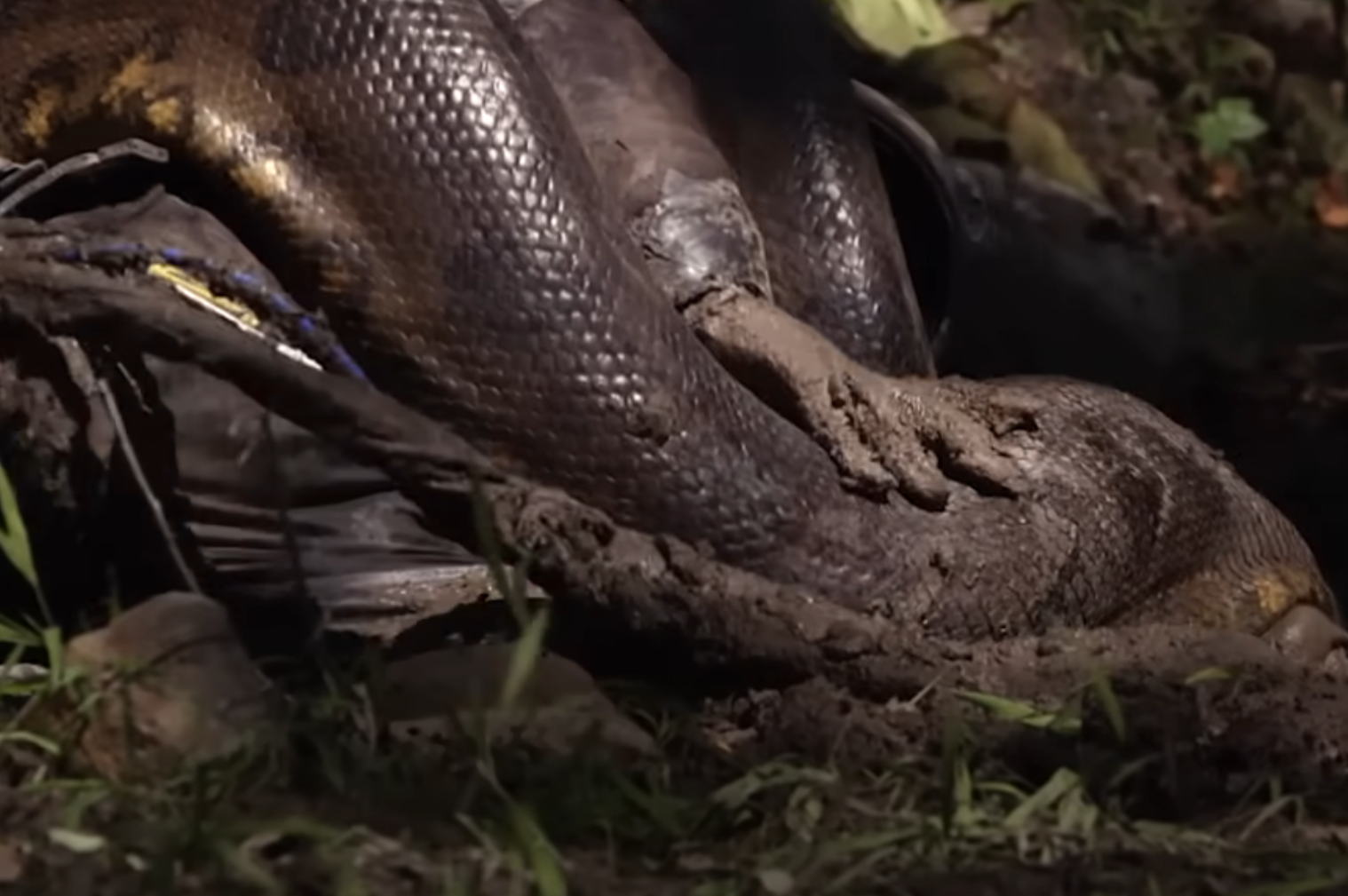
He had to call it a day after the snake latched onto his head
Discovery Channel
advertisement
How the team prepared him for the anaconda
Rosolie did not enter the encounter unprotected. He wore a custom carbon-fiber suit built to shield his body from the anaconda's teeth and help him withstand some of the pressure created when it began constricting him.
The suit also carried its own oxygen supply so he could keep breathing, along with cameras and a microphone that allowed the crew to watch and hear what was happening from his point of view.
There was one more unpleasant part of the preparation: pig's blood was spread over the suit in an attempt to make Rosolie smell more appealing to the snake. After all of that preparation, the only thing left was getting close enough for the anaconda to react.
advertisement
Rosolie approached the anaconda on all fours and eventually got the response the team had been waiting for. But rather than simply opening its mouth and beginning to swallow him, the snake wrapped its powerful body around him and started constricting.
Within the coils, Rosolie found he could no longer move. The pressure kept increasing until he became worried about one of his arms. He later said he could feel the bone flex and feared the anaconda was close to breaking it.
That was enough. Rosolie called for his team to end the experiment before the snake could get any further, meaning Eaten Alive ultimately documented what it felt like to be attacked and constricted by an anaconda rather than a man actually disappearing inside one. Check out the footage below:
advertisement
What Paul Rosolie is doing now
Despite what the name Eaten Alive may suggest, Rosolie survived and continued working in conservation. More than a decade later, he remains involved in protecting the Peruvian Amazon through Junglekeepers, the organization he helped found.
His willingness to stop the experiment is especially notable given how he describes his own attitude toward danger. When the anaconda had him trapped and he decided he had reached his limit, he told the team: "Stand by guys, I'm starting to feel like she's consuming me. Guys, my face is down. I'm calling it, I need help!"
Getting out of those coils did not end his interest in dangerous snakes. Rosolie has continued working around them and later shared footage to Instagram showing a boa constrictor wrapped tightly around his arm. His current conservation work remains focused on the Amazon, where Junglekeepers operates in Peru's Madre de Dios region to protect threatened rainforest habitat.
advertisement
Rosolie used the caption to explain that the encounter looked rougher than it actually was and that he was taking care not to get bitten: "I know it looks like I'm manhandling her head but she's actually in control. I'm just holding her head so I don't get bit (these ones at this size kinda suck to get bitten by..) also, I had to work hard to get outta those coils."
So the Eaten Alive experiment did not scare him away from constrictors for good. It did, however, prove there is a considerable difference between knowing how powerful one of these snakes is and experiencing that power while trapped inside its coils.
More than a decade after the Discovery stunt, he is still putting himself close to the animals he has spent much of his career trying to protect. Some habits, apparently, survive even an anaconda.