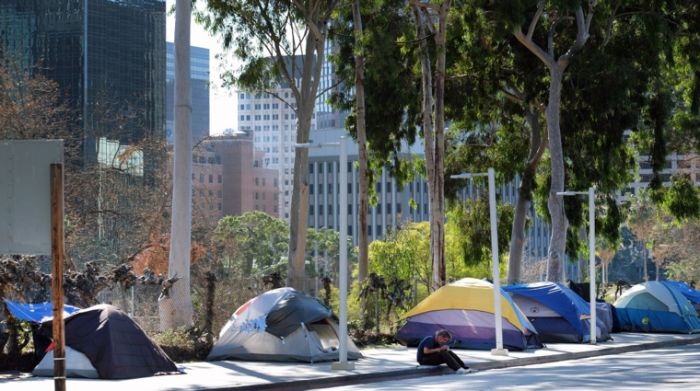
As homelessness woes mount, one big-hearted solution is squashed. City officials believe the tiny houses for the homeless, no matter how well-intentioned or constructed, present a public safety hazard.
Los Angeles Is Seizing And Destroying Tiny Houses Donated To Homeless People
By
Editorial Staff in
Bizarre
On 7th March 2016
advertisement
#1 The City Of Los Angeles Is Removing Tiny Homes Built For The Homeless
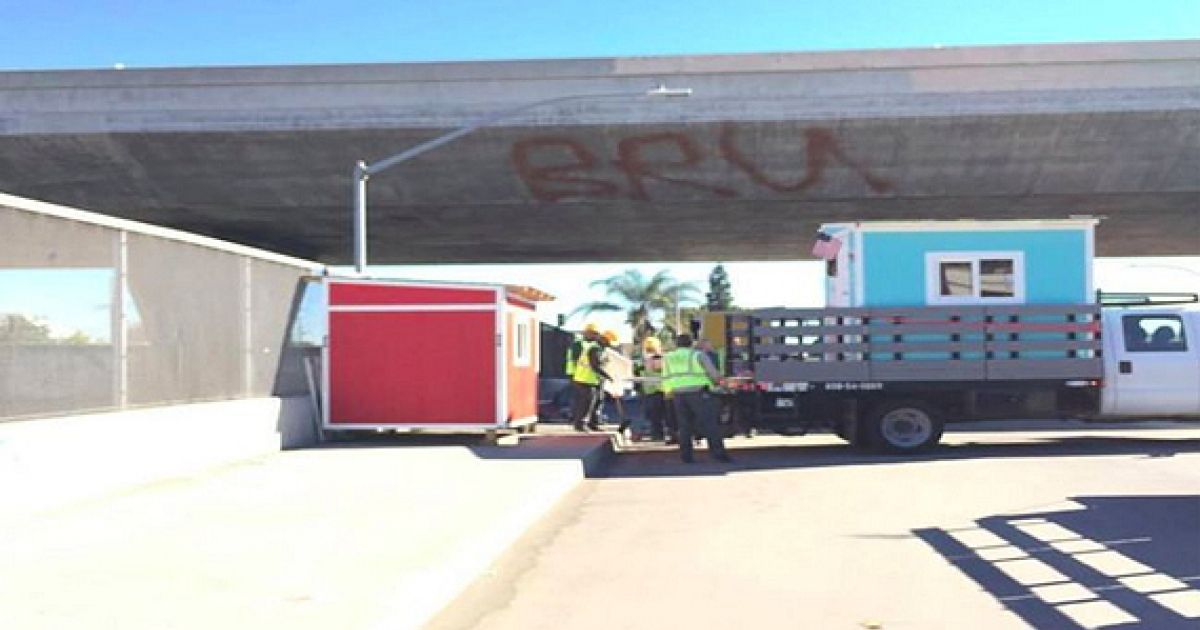
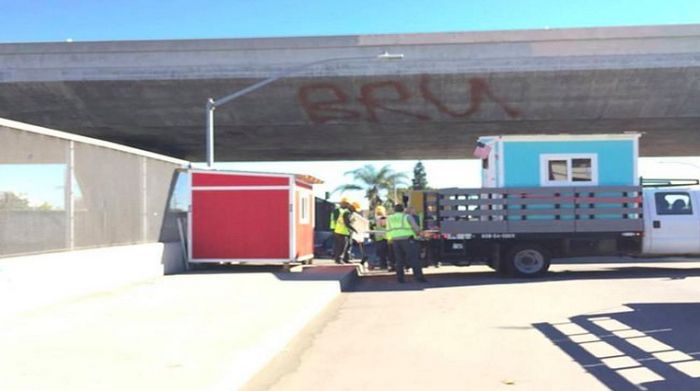
Less than a year after an online funding campaign began donating tiny houses to homeless encampments in and around Los Angeles, the city is confiscating and destroying the donated miniature dwellings. For months, gaily painted wooden houses on South Los Angeles freeway overpasses had intrigued motorists looking up from the roads below.
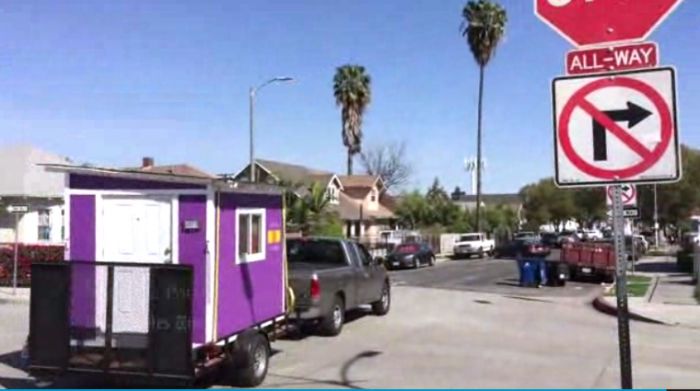
The 6-by-10-foot structures, it turned out, were homes for the homeless that Elvis Summers had built and placed in several encampments around the city.
#2 They Were Built And Donated By Elvis Summers Through A GoFundMe Page
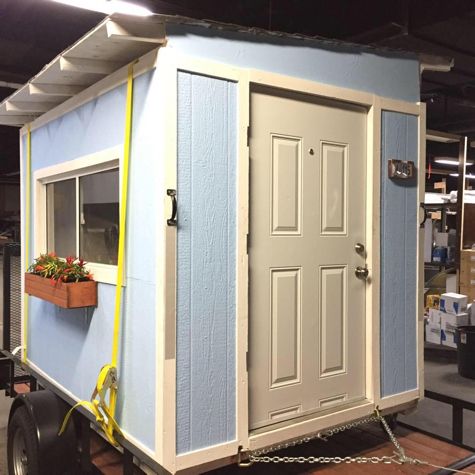
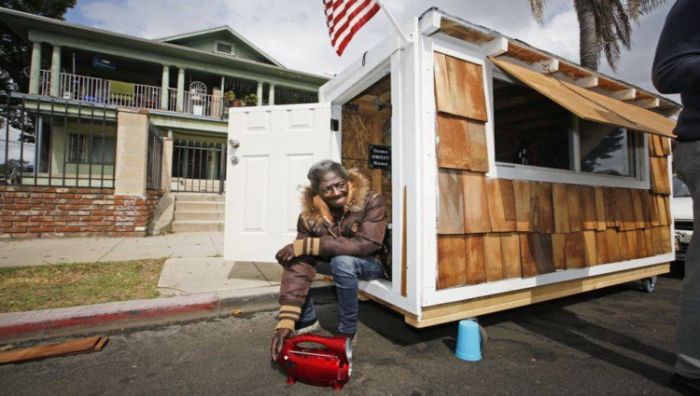
Each house, about the size of a garden shed, came with an American flag, solar-powered lights and a house number, proudly displayed next to the front door.
"It's psychology," said Summers, a self-described struggling musician who lives in South L.A. "The slightest thing you do to make them feel normal is so important. They're treated like garbage."
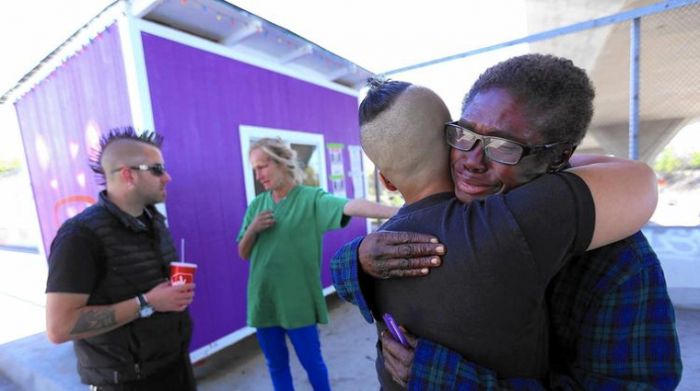
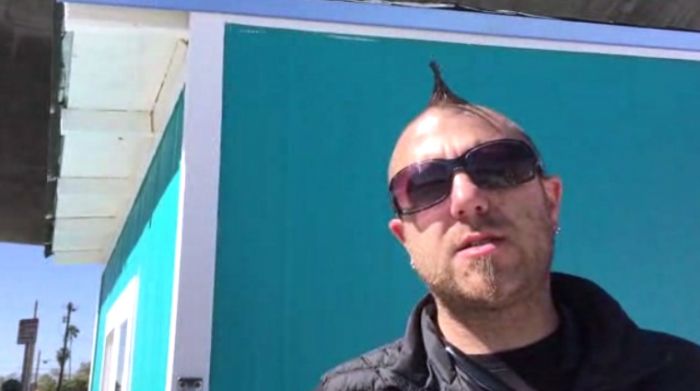
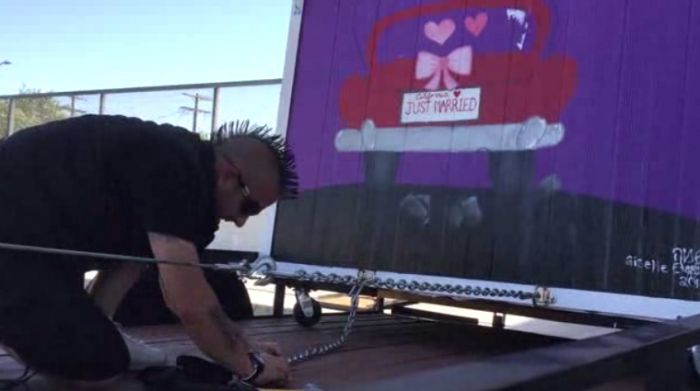
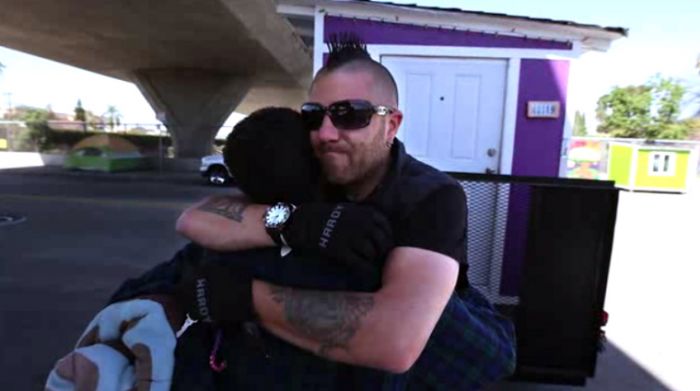
Elvis Summers is not part of any nonprofit or government agency. He's just a 38-year-old guy with a Mohawk and tattooed arms who started a GoFundMe campaign last spring so he could build tiny houses for homeless people to live in. He got the idea after befriending a homeless woman in his neighborhood.
advertisement
#3 City Crews Began Tagging The Structures And Hauling Them To A Junk Yard
Last week, Summers raced to remove eight small houses ahead of city sanitation workers sent to impound and possibly destroy them. Summers' crusade had run into Los Angeles' intractable homelessness crisis. The city recently adopted a tough ordinance to sweep out camps, as well as a $2-billion homelessness plan with new shelter and housing options.
The city, however, is struggling with how to pay for the plan. In the meantime, homeless advocates discovered tiny houses. That's where the tiny house project grew from. The sweeps ordinance, however, targeted tiny houses to be seized and discarded as "bulky items."
#4 The Homes Provide Comfort And Shelter To Those In Need
To date, Summers, along with the help of a loyal group of volunteers, have constructed and distributed 37 tiny houses to those living on the streets of South L.A. Costing roughly $1,200 each to build, each portable structure is clad with rooftop solar panels and equipped with a camping toilet.
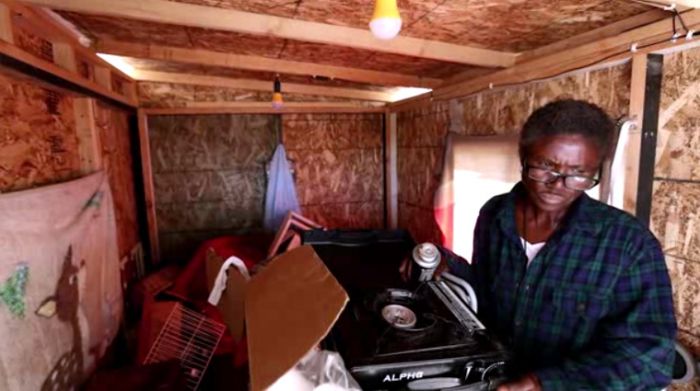
The dwellings certainly aren't anything fancy they're immediately reminiscent of backyard playhouses or garden sheds in their simplicity and size. And they certainly aren't kitted out. However, there are four walls, windows, a door that locks and that all-important architectural feature that most take for granted: a roof.
advertisement
#5 The Removal Of The Homes Is Displacing The Homeless Residents Once Again
Three of Summers' houses confiscated from a South L.A. overpass during a cleanup earlier this month are stashed in a city equipment lot while the City Council deliberates their fate, officials said. Summers hauled eight others to a Compton church lot and other locations, sending occupants back to the sidewalks. Two of the homes have already been destroyed by the city.
Councilman Curren Price, who requested the cleanup, said the structures posed a serious health and safety problem.
"Police have identified firearms, drug activity going on," Price said. "A box of plywood is still a box." However, Summers said "When the city took the houses, they didn't offer housing, they straight kicked them out, back in to cardboard boxes in a different location."

advertisement
#6 The First Home Was Built For Local Neighborhood Woman That Everyone Knew And Cared About
Summers, 38, who said he was briefly homeless in Orange County, recalls discovering tiny houses where else? on the Internet. He decided to build one for a homeless woman in his neighborhood, named Snookie. The neighborhood residents were pleased she finally had a place to stay. From that, the crowd sourcing page grew and the construction of homes for others in the neighborhood. The houses are all on wheel and mobile, which is why Summers does not understand how the city can remove them, since they are not permanent fixtures.
advertisement
#7 Summers Had To Scurry To Save The Homes He And His Crew Had Built
Before the homes overlooking the 110 Freeway were hauled off, residents had begun to personalize them.
The outside of June Briggs Cannon's house featured a mural of a pink convertible trailing shoes captioned "Just Married." Summers said he arranged Cannon's marriage to her longtime partner, Larry Joe.
Summers and his crew are trying to remove the homes as quickly as possible before all are destroyed by the city sanitation department. This is putting those residents out of their homes once more, but it's the only way to keep them safe until there is a solution.
advertisement
#8 Some Residents In The Area Of The Homes Complained About The Dwellings
Many South L.A. residents have rallied around Summers' mission to "give people in the world a safe place to sleep." Others, not so much. Some local residents have claimed that's there's been an uptick in prostitution, theft and drug-related activity since the arrival of the tiny houses. Some simply don't like the way they look.
Summers said it was unfair to blame the houses for a drug problem among the homeless that already existed.
advertisement
#9 He Is Seeking Empty Land To Place The Dwellings And The City Has Lots Of Unused Property
He said he put the houses by the freeway because they would not block businesses or other residences. His ultimate goal, he added, was to get land perhaps an empty lot next to the Compton church for a tiny-house village.
Cities such as Seattle and Nashville are experimenting with such camps. Portland, Ore., has approved two self-governing homeless encampments that include small huts or tiny houses, said Kurt Creager, director of the Portland Housing Bureau.
"The expense to the city is minimal," just water, power and sanitation, Creager said. He noted that just 3 miles from the center of the city there are over 250 complete blocks that are nothing but boarded up buildings and empty lots where such a village could be constructed. Some of the abandoned buildings have been condemned and due to be demolished long ago.
advertisement
#10 The City Is Saying They Need A Solution But Is Not Doing Much About It
Even as Summers hustled this week to remove the eight houses from South L.A. before the city could take them, he said he still has 26 in places "where [officials] can't find them," in communities such as Van Nuys and Inglewood.
"They keep just saying we need permanent housing, but it never happens," Summers said. "It's not a permanent solution, but nobody else gives a crap about these people."
advertisement
#11 Summers Continues To Move Ahead With His Plans And Hopes To Get A Tiny Village Constructed Soon
Despite feeling the wrath of the bureaucratic powers that be, Summers remains undeterred and defiant. He has vowed to continue providing shelter to as many of the roughly 44,000 people living on the streets of Los Angeles as he can. He's also hard at work converting a donated trailer into a mobile shower and laundry facility. In the meantime, the number of those living without shelter continues to grow on the city's sidewalks.
advertisement
#12 Los Angeles Is America's Homelessness Capital
Los Angeles has tried camps before. The city opened a downtown shantytown in the 1980s. Homeless activist Ted Hayes later launched a self-governing enclave called Justiceville. It was reborn as Dome Village in 1993 in a parking lot near what is now Staples Center. Homeless people lived in geodesic domes the tiny houses of their day. Rising land values drove the village out in 2005. The closure of that "village" sent over 2,000 homeless people back to the streets.
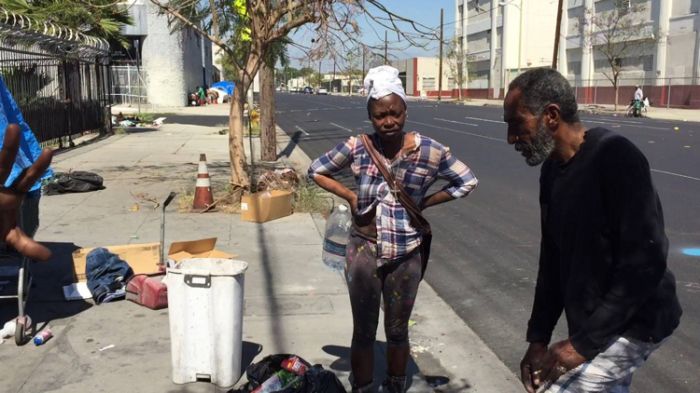
Today you can see pop-up structures scattered all over the city in the form of little tents or cardboard boxes. The communities are appearing everywhere from downtown LA to the beaches of Pacific Palisades. Every few days the city comes in and begins to evacuate the streets, but they just pop up a few blocks away, since there really is no place else to go.
Los Angeles is the nation's homelessness capital, with tens of thousands sleeping on the streets each night.