

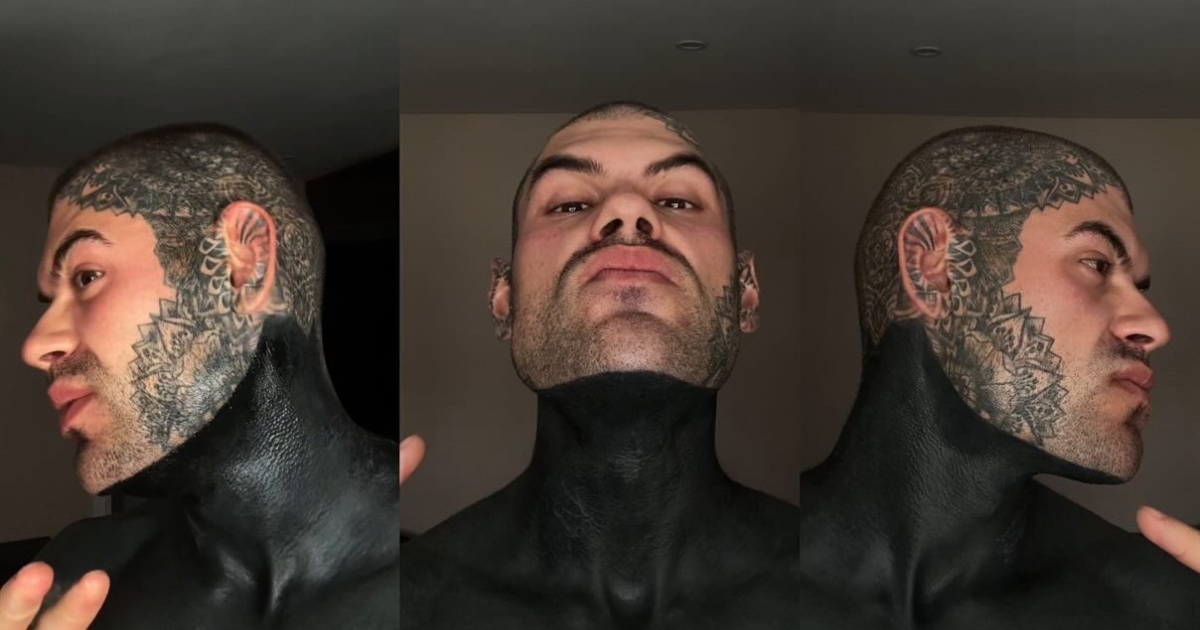
Dave Chudley explained why blackout work needs a specialist, and why the public reaction is not always what people expect.
advertisement
Dave Chudley did not go into blackout tattooing with a full guidebook. He learned most of it the hard way, after starting the process in 2020 and slowly covering large parts of his body in solid black ink.
Dave Chudley is now covered from head to toe in blackout tattoos, but he says the look is far more technical than people assume when they first see it online.
He began the process before the style became better known to the public. In the years since, celebrities such as Machine Gun Kelly have helped bring blackout work into the mainstream by covering large areas of their own bodies with solid black ink.
Blackout tattooing is exactly what it sounds like on the surface: large sections of skin are filled with black ink. Some people use it to cover old tattoos, while others choose it for the bold, clean look it creates.
That simple description is also part of the problem. Dave says many people think the process is easy because it does not involve fine-line detail, shading, or a visible design. He explained: "'It's just colouring it in.' No, it's not just colouring it in. There's so much to it, because it's not just about colouring the skin in, it's about not damaging the skin in the process, achieving that smooth finish, complete saturation,"
For Dave, that was one of the biggest surprises. He says the style has its own skill set, and it can go wrong if the artist does not know how to pack the ink into the skin without causing damage. "People think it's easy, it is not, it's far from it, it's actually very, very difficult."
advertisement
When Dave looks back at the start of his blackout journey, three lessons stand out more than anything else.
First, he wishes he had known how hard the style is to do well. Second, he now believes a specialist should handle the work, not a general tattoo artist trying it for the first time. Third, he says the process was still unclear in 2020, so artists and clients were learning through trial and error.
Those points matter because blackout work leaves little room to hide mistakes. Uneven saturation, poor healing, or damaged skin can change the final look, and fixing the problem may take removal, rework, or more sessions.
Why blackout work needs extra planning
A normal tattoo already needs careful aftercare, but blackout work can place much more stress on the skin because so much area is filled at once. That makes planning the artist, session length, ink choice, and healing routine a much bigger part of the result.
Healthline notes that blackout tattoos can involve more swelling and recovery time than smaller tattoos, while still carrying the same basic risks as other tattoos, including skin infection.
That helps explain why Dave speaks about the process with caution. The finished result may look like one solid block of black, but the work behind it depends on pressure, needle choice, consistency, and knowing when the skin has had enough.
advertisement
The mistake Dave made with his first blackout tattoo
Dave's first attempt began with his forearm in 2020. Once it healed, he realized it did not match the rest of his tattoos the way he had hoped.
The result bothered him enough that he had the work removed and started again from scratch. After that, the project slowly moved further up his arm as he learned what the style needed to look right.
Dave puts that early mistake down to the timing. Blackout tattooing was not as clearly mapped out then, and he says the process often felt like everyone was figuring it out during the appointment. "We didn't know a lot about it back in 2020. It was more the artist will experiment along with you as they're doing the work, maybe we need two passes, maybe this needle, maybe that needle,"
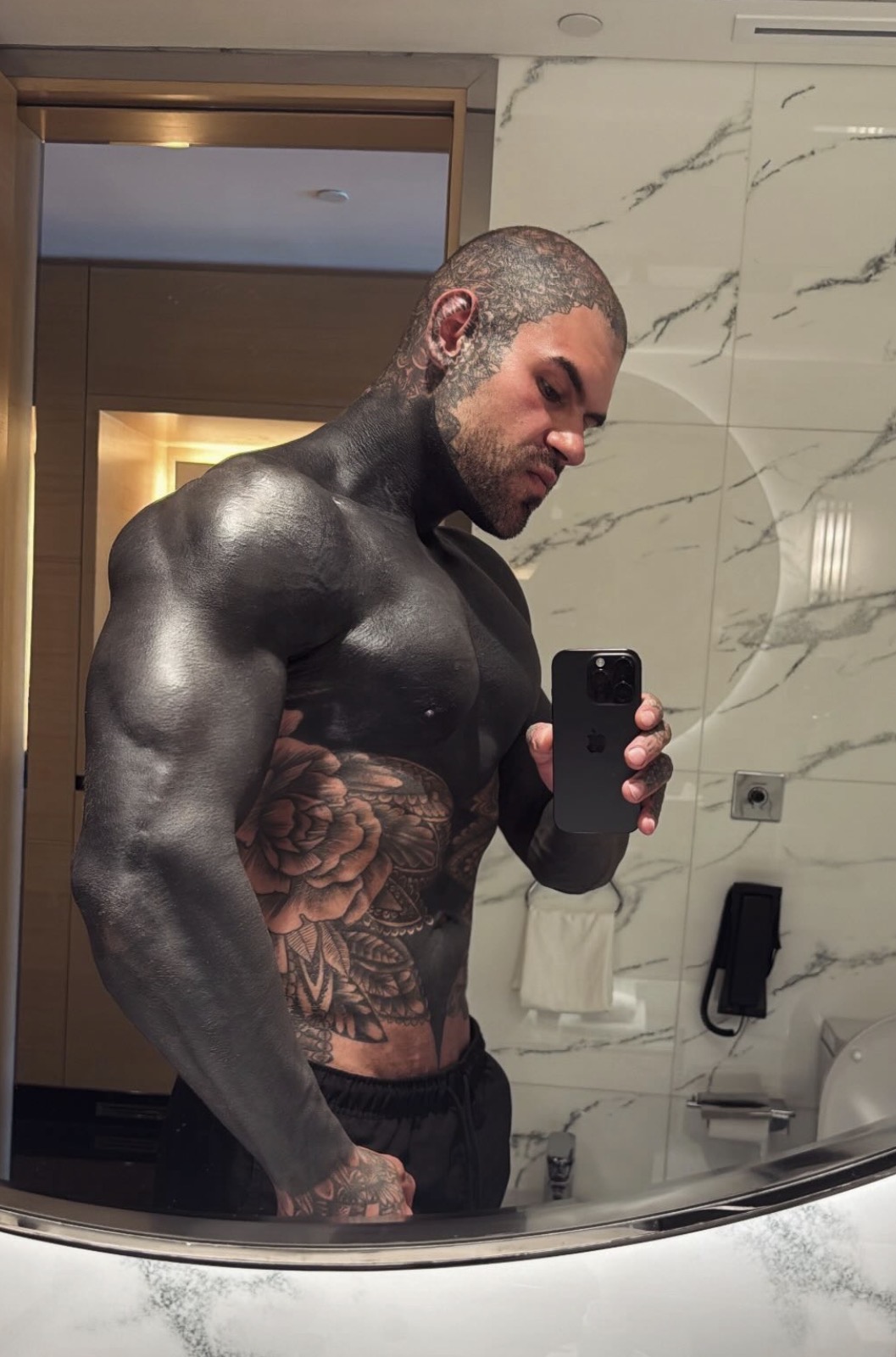
Dave Chudley
advertisement
Why Dave says blackout tattoos need a specialist
That early experience is why Dave now says blackout work should be done by someone who focuses on it, not by a general artist taking a chance on a difficult style.
He now travels to see Johnny Ransom, a Berkshire-based artist who works only on blackout tattoos. Dave says that focus makes a clear difference in the final result.
"His saturation is the best. He knows exactly how to [do it], this is the only thing he does. He's the best in the UK, potentially even in Europe," he claimed. For Dave, the biggest change is that the guesswork he dealt with in the beginning no longer feels like part of the process.
advertisement
"There is a very concise blueprint to how the work is done. We know what inks to use, we know what needles, we know what machine, we know exactly how to heal it in the best way possible."
That clearer process has arrived at the same time blackout tattoos have become much more visible. What used to be a niche style is now one of the most talked-about forms of body art, especially when famous people share large black coverups online.
Dave also says public reaction is not as dramatic in real life as people might expect. The bigger response tends to happen on social media, where tattoo clips reach people who may not know much about tattoo culture or the different meanings behind black ink, including black band tattoo designs.
advertisement
"The reactions come from online. When a video reaches viral status, it tends to get pushed out to audiences that aren't involved in the tattoo industry. To people in the tattoo industry, it's like, whatever, just blackout."
So while strangers online may be shocked by the look, Dave says people inside the tattoo world tend to understand it as one more style choice. To them, blackout work may look extreme, but it is not automatically strange.
His main advice is still practical: do not assume solid black means simple. For anyone considering it, the artist's experience and the healing plan matter just as much as the finished look.