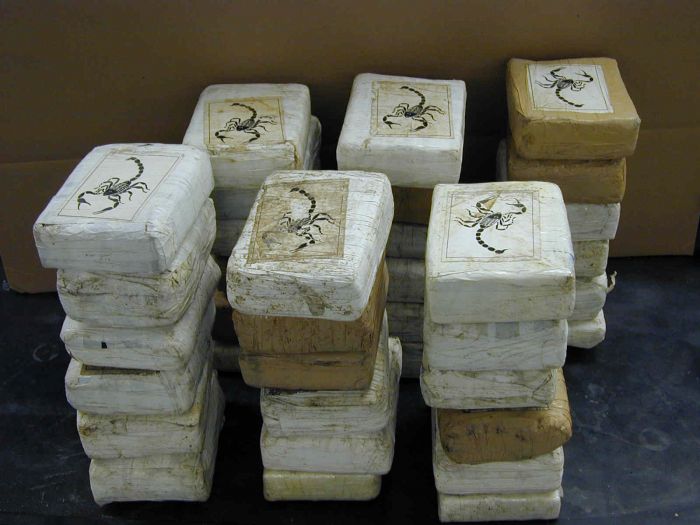
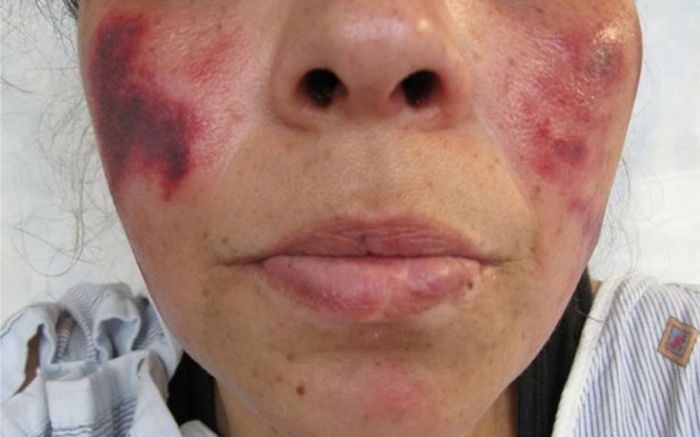
Last week, a case study published in the British Medical Journal revealed that a new type of cocaine was being sold around Britain, which was causing the user’s flesh to rot. Many media outlets published stories of the horrifying news, accompanied with images of a woman with gruesome dark blotches and open sores, looking like she’s caught the black death rather than just had a line of coke.
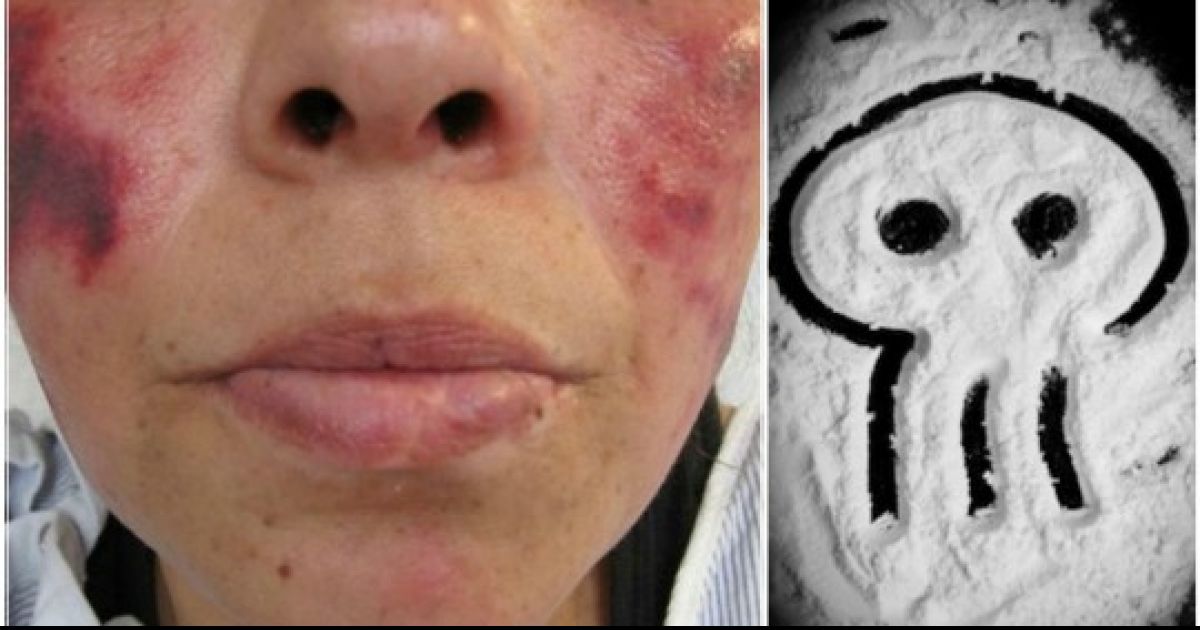
The True Facts Behind Britain’s ‘Flesh-Eating’ Cocaine
By
Editorial Staff in
Bizarre
On 11th December 2015
advertisement
#1 The cause of the condition was levamisole, which is a drug used to deworm cattle, and can often be used as a cutting agent (cheaper diluting agent) in cocaine supplies. In fact, reports were claiming that “80%” of cocaine in the UK contained levamisole.
The warning; do cocaine and your skin will drop off.
However, what really is the truth behind these figures? Because it is estimated that 21 million people worldwide regularly use cocaine, so if this flesh-eating response was true, wouldn't the hospitals be full of people with rotting skin?
The truth is, the chances of anybody actually developing this disorder are incredibly unlikely.
Levamisole is found in a lot of cocaine supplies. In fact, depending on where you live, between 40% 90% of cocaine in the area will contain the drug. The official figures in recent years are as follows;
UK 80%
USA 73%
Holland 60%
Denmark 90%
Spain 57%
Although, these figures are high, and therefore, very concerning, a more important factor is actually how much levamisole is in the cocaine. VICE recently spoke to a number of experts in cocaine research, including purity analyst, Lana Brockbals, who works at the drug identification firm, TICTAC. Lana found that out of 106 cocaine samples confiscated at an unnamed British festival in 2014, a staggering 83 contained traces of the de-wormer.
#2 Although, the average concentration of levamisole within each sample was just over 5%, with many of the samples containing between 1.5%-5%.
In the Netherlands, a study carried out between 2011-2014 found that out of 5,000 cocaine samples found on the streets, the average concentration was 9%. Last year, Spain revealed their figure to be 11.9%, and in the US, the DEA announced the figure as 9%.
In fact, in an analysis carried out by the Energy Control drug testing service, the results of 103 random cocaine samples put the global average concentration at 11%
So, what percentage is actually needed to cause this flesh-eating effect on users? Dr Lindy-Anne Korswagen, one of the authors of the BMJ study, and a doctor at Sint Franciscus Gasthuis Hospital in Rotterdam, stated;
"Given the fact that many people use cocaine, of which large percentages are adulterated with levamisole, our case is rare. The risk of side effects such as agranulocytosis or levamisole-induced vasculopathy with skin ulcers and serious organ damage is small. Between 2011 and 2014, there were 210 cases reported worldwide, of which three have died."
Although, Dr Korswagen did also state that there is a possibility of further undiagnosed and unreported cases.
Another study, published in a US medical journal in 2013, also claimed that the individuals who developed a flesh-eating reaction to cocaine were usually heavy users;
"Many of these affected individuals are chronic, habitual cocaine users, suggesting a large cumulative exposure to cocaine and, by association, levamisole, possibly over an extended period of time."
advertisement
#3 VICE spoke to Dr Robert Hoffman, a toxicologist and an expert in levamisole from the New York University Langone Medical Center, who claimed that the levels of the de-wormer found in the majority of cocaine samples “is probably too low” to affect most users, in fact, it can be tolerated. He stated;“Let’s say the typical dose of cocaine might be 100mg, so there could be 10mg of levamisole in each dose of cocaine used. Currently, there are still trials where levamisole is used and a dose might be on the order of 150mg over a day. To get that much levamisole, you would have to use a lot of cocaine. So yes, to an extent, the low concentration is somewhat protective in that the total daily dose will be low.”He added;“The literature suggests that some patients have a unique genetic predisposition that increases their risk of toxicity. There is always some consideration for dose, but it is a combination of dose plus susceptibility that sets the risk. Luckily for cocaine users, the known responsible genetic abnormality is very uncommon.”This means that it’s not just about how much levamisole is in the cocaine, but about whether or not the user actually has a rare genetic vulnerability to the drug, and the gene which causes this toxic response is HLA-B27. So, how many people have this particular gene? Well, the figures are as follows;Caucasians – 8%North Africans 4%Chinese – 2%-9%Japanese – 0.1%-0.5%Lapland, Finland – 25%Yeah… that last one is a little weird.
So, why is the de-wormer used in the first place? Well, it's easy to picture all cartel drug chemists like Walt and Jesse from Breaking Bad, producing cocaine in a run-down trailer, or in a pop-up lab in the middle of the rainforest. However, journalist and author, Mike Power, revealed that is far from the truth;
"It's a mistake to think Colombian cocaine producers are peasants in a jungle lab.
It would be astonishing if the narco-cartels didn't know about the emerging evidence around the stimulant effects of levamisole. Four years ago in Colombia, I saw how the crystallisation [of the paste] process was moving from the jungles to underground urban labs, in well guarded apartment blocks. This is a complex science. If they can increase their profits by 10% by including an active cut that ticks all the boxes, then it's a no-brainer. And because most of it is being added at end of the process, before export, we know it's being facilitated by people at the high end of the trade. They know exactly what they are doing."