Some abandoned ghost towns are now tourist attractions, while others might be dangerous or illegal to visit. Meet some of the most fascinating ghost towns from around the world.
advertisement
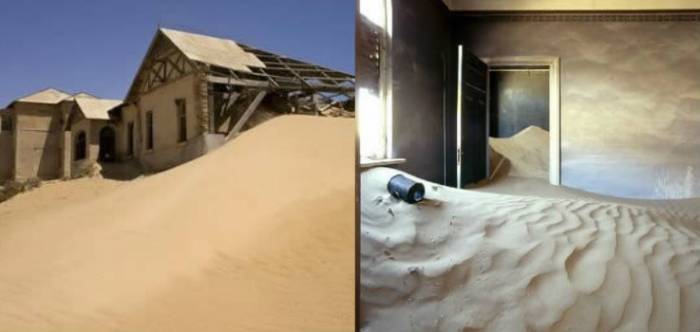
#1 KOLMANSKOP (Namibia): Buried in sand
Kolmanskop is a ghost town in southern Namibia, a few kilometers inland from the port of Lüderitz. In 1908, Luederitz was plunged into diamond fever and people rushed into the Namib desert hoping to make an easy fortune. Within two years, a town, complete with a casino, school, hospital and exclusive residential buildings, was established in the barren sandy desert.
A couple of old buildings are still standing and some interiors like the theater is still in very good condition, but the rest are crumbling ruins demolished from grandeur to ghost houses.
#2 PRYPIAT (Ukraine): Chernobyl workers' home
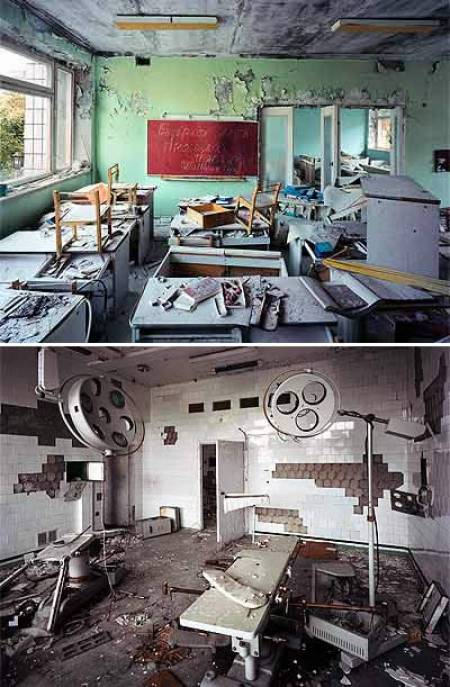
Prypiat is an abandoned city in the "zone of alienation" in northern Ukraine. It was home to the Chernobyl Nuclear Power Plant workers, abandoned in 1986 following the Chernobyl disaster. Its population had been around 50,000 prior to the accident.
The buildings are not maintained, the roofs leak, and in the spring the rooms are flooded with water. It is not unusual to find trees growing on roofs and even inside buildings. This hastens deterioration, and due to this, a 4-story school partially collapsed in July of 2005.
advertisement
#3 SAN ZHI (Taiwan): a futuristic resort
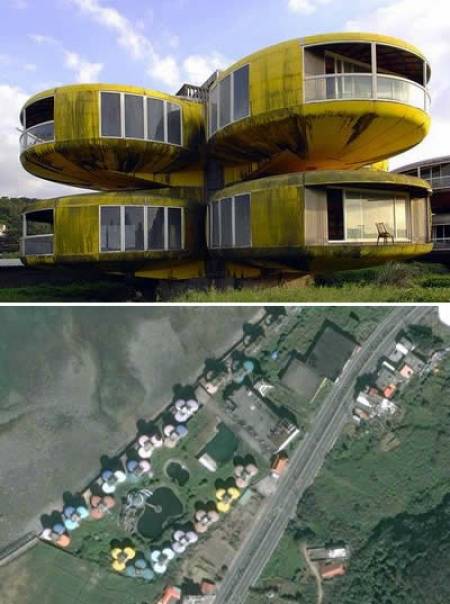
In the North of Taiwan, this futuristic pod village was initially built as a luxury vacation retreat for the rich. However, after numerous fatal accidents during construction, production was halted. A combination of lack of money and lack of willingness meant that work was stopped permanently, and the alien-like structures remain as if in remembrance of those lost. Indeed, rumors in the surrounding area suggest that the City is now haunted by the ghosts of those who died.
#4 CRACO (Italy): a fascinating medieval town
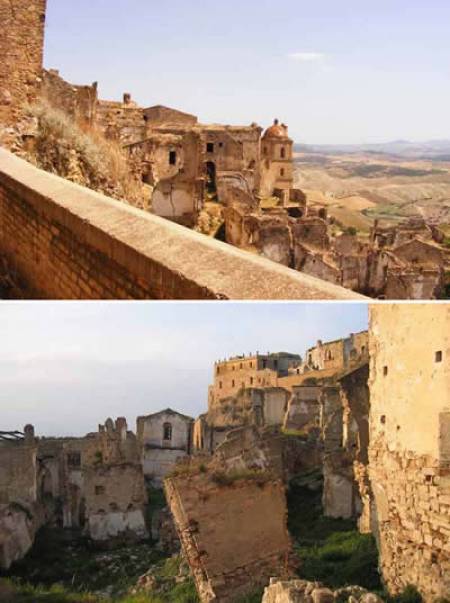
Craco is located in the Region of Basilicata and the Province of Matera. About 25 miles inland from the Gulf of Taranto at the instep of the "boot" of Italy.
In 1891, the population of Craco stood at well over 2,000 people. Though there had been many problems, with poor agricultural conditions creating desperate times. Between 1892 and 1922 over 1,300 people moved from the town to North America. Poor farming was added to by earthquakes, landslides, and War - all of which contributed to this mass migration. Between 1959 and 1972 Craco was plagued by these landslides and quakes. In 1963 the remaining 1,800 inhabitants were transferred to a nearby valley called Craco Peschiera, and the original Craco remains in a state of crumbling decay to this day.
advertisement
#5 ORADOUR-SUR-GLANE (France): the horror of WWII
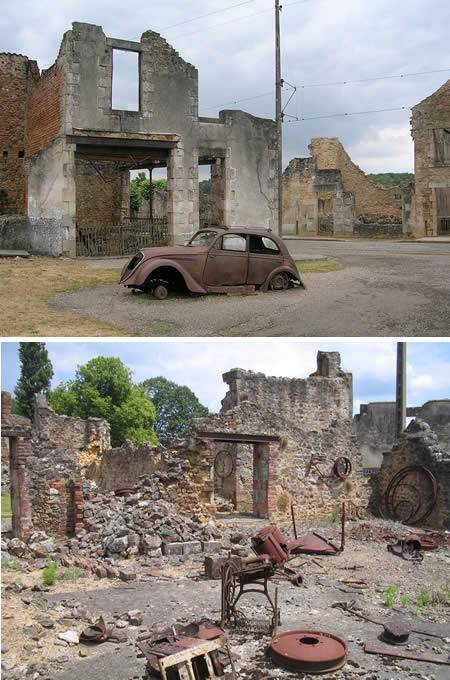
The small village of Oradour-sur-Glane, France, is the setting of unspeakable horror. During World War II, 642 residents were massacred by German soldiers as punishment for the French Resistance. The Germans had initially intended to target nearby Oradour-sur-Vayres and mistakenly invaded Oradour-sur-Glane on June 10th 1944. According to a survivor's account, the men were herded into barns where they were shot in the legs so they would die more slowly. The women and children, who had been held in a church, all perished when their attempt to escape was met by machine-gun fire. The village was razed by the Germans afterward. Its ruins still stand today as a memorial to the dead and a reminder of the events that took place.
advertisement
#6 GUNKANJIMA (Japan): the forbidden island
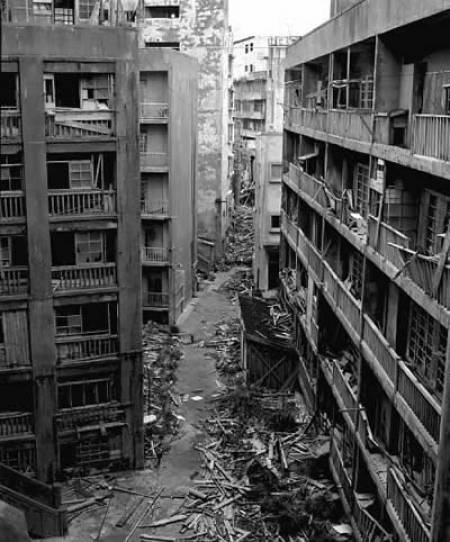
This island is one among 505 uninhabited islands in the Nagasaki Prefecture of Japan about 15 kilometers from Nagasaki itself. It is also known as "Gunkan-jima" or Battleship Island thanks to its high sea walls. It began in 1890 when a company called Mitsubishi bought the island and began a project to retrieve coal from the bottom of the sea.
In 1974 Mitsubishi officially announced the closing of the mine, and today it is empty and bare, with travel currently prohibited. The island was the location for the 2003 film ‘Battle Royale II' and inspired the final level of popular Asian videogame "Killer7".
advertisement
#7 KADYKCHAN (Russia): memories of the Soviet Union
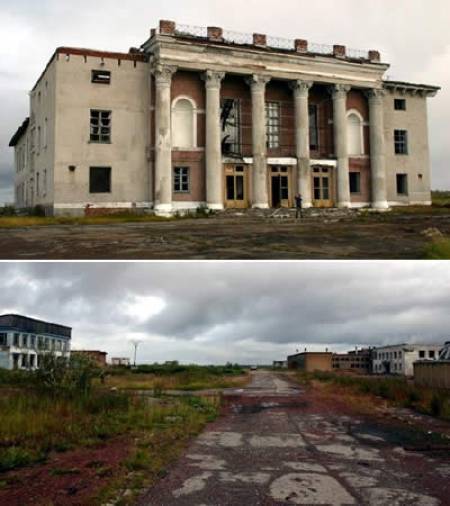
Kadykchan was one of many small Russian cities that fell into ruin when the Soviet Union collapsed. Residents were forced to move to gain access to services like running water, schools and medical care. The state moved them out over a period of two weeks, and they were taken to other towns and provided with new housing. Once a tin mining town of 12,000 people, the city is now desolate. In their hurry to leave, residents left their belongings behind in their homes, so you can now find aging toys, books, clothing and other objects throughout the empty city.
advertisement
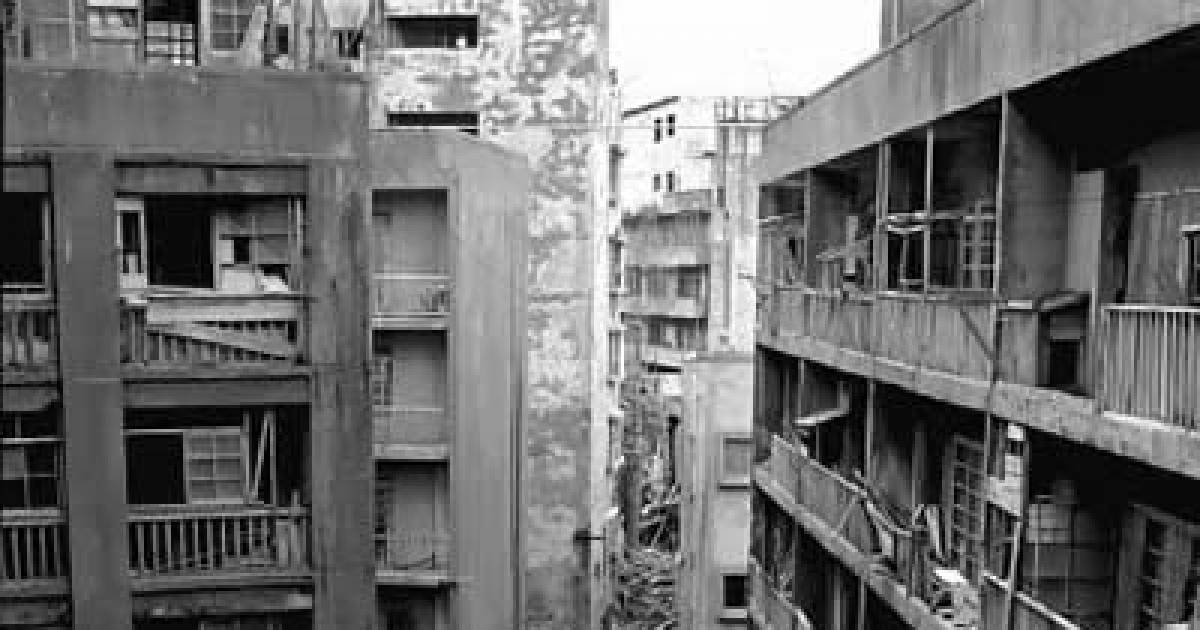
#8 KOWLOON WALLED CITY (China): A lawless city
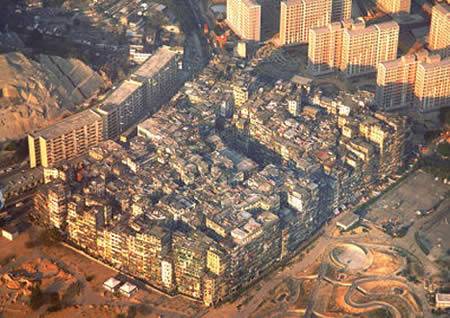
The Kowloon Walled City was located just outside Hong Kong, China during British rule. A former watchpost to protect the area against pirates, it was occupied by Japan during World War II and subsequently taken over by squatters after Japan's surrender. Neither Britain nor China wanted responsibility for it, so it became its own lawless city. It was finally torn down in 1993 after a mutual decision was made by British and Chinese authorities, who had finally grown wary of the unsanitary, anarchic city and its out-of-control population.
advertisement
#9 FAMAGUSTA (Cyprus): once a top tourist destination, now a ghost town.
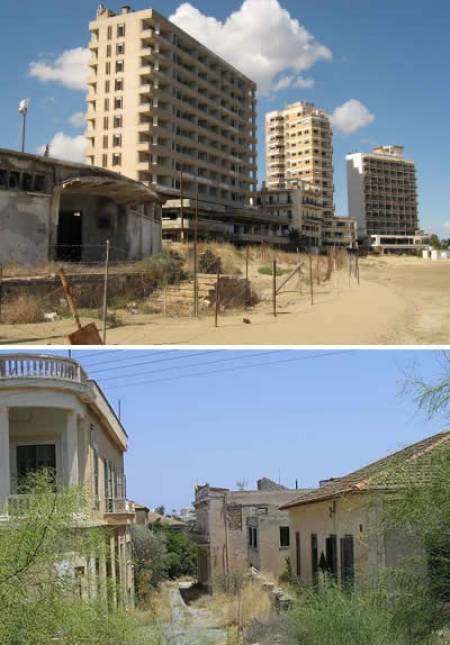
Varosha is a settlement in the unrecognized Republic of Northern Cyprus. Prior to the 1974 Turkish invasion of Cyprus, it was the modern tourist area of the city of Famagusta. For the last three decades, it has been left as a ghost town. In the 1970s, the city was the number one tourist destination in Cyprus. To cater to the increasing number of tourists, many new high-rise buildings and hotels were constructed.
By 2010, the Turkish Cypriot administration of the de-facto Turkish Republic of Northern Cyprus plan to reopen Varosha to tourism and the city will be populated as one of the most influential cities in the north of the island.
advertisement
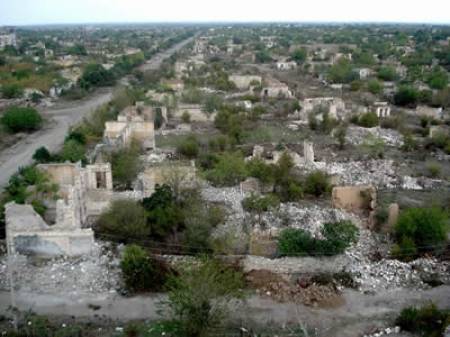
#10 AGDAM (Azerbaijan): once a 150,000 city of people, now lost
The eerie city of Agdam, Azerbaijan was once a thriving city of 150,000 people. It was lost in 1993 during the Nagorno-Karabakh war; though the city was never the setting of combat, it fell victim to vandalism while occupied by Armenians. The buildings are gutted and empty, with only the graffiti-covered mosque remaining intact. Agdam residents have moved to other areas of Azerbaijan, as well as into Iran.