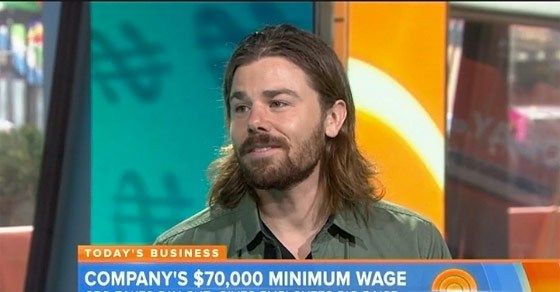
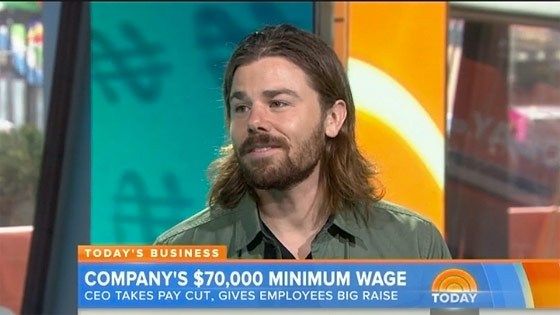
#1 Just three months ago, Dan Price was a progressive hero.
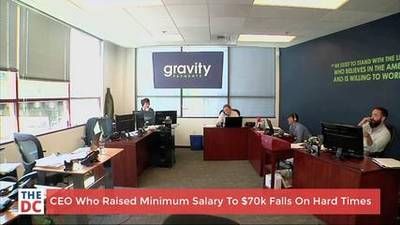
To much fanfare, Price, CEO of Seattle-based Gravity Payments, announced he was raising the minimum salary for employees of his company to $70,000, and taking a $930,000 pay cut himself to help pay for his new minimum wage. Three months later, the experiment does not go well.
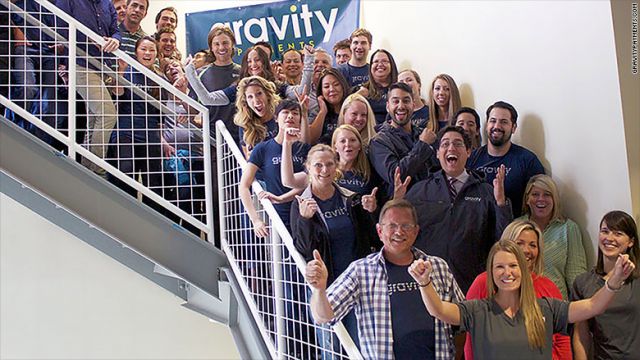
#2 When Price told employees of the new pay policy there was stunned silence for several moments before people broke into applause and high fives said Phillip Akhavan, a merchants relations worker whose $43,000 salary immediately jumped 16% to $50,000.
Price has had to rent out his own house to help cover his bills. In addition, the New York Times reports Gravity lost two of its most valuable employees whose departure was "spurred in part by their view that it was unfair to double the pay of some new hires while the longest-serving staff members got small or no raises."
#3 Most of the company’s profits, $2.2 million last year, were reinvested in the company not to expand or innovate, but to cover the new minimum wage.
The Seattle business community was split on the decision at the time, before Gravity's current financial problems.

#4 Price’s brother and Gravity co-founder, Lucas Price, has also filed a lawsuit against the company that it, thanks to the new higher payroll, finds itself having difficulty paying legal fees for.
Lucas Price, who owns 30 percent of the company, accuses his brother of taking millions of dollars out of the company while denying him the benefits of his minority ownership.
The lawsuit has forced Gravity to pay mounting legal fees at a time when the new salary scale is being eaten up by profits.
"We don't have a margin of error to pay those legal fees," Dan Price said.

#5 At the time of his announcement, Price, 31, was praised for his forward thinking.
Price's move was born out of a desire to bring more income equality to his workforce.
For the time being the $70,000 minimum wage stands, but for how long Gravity Payments can survive, is up in the air.