

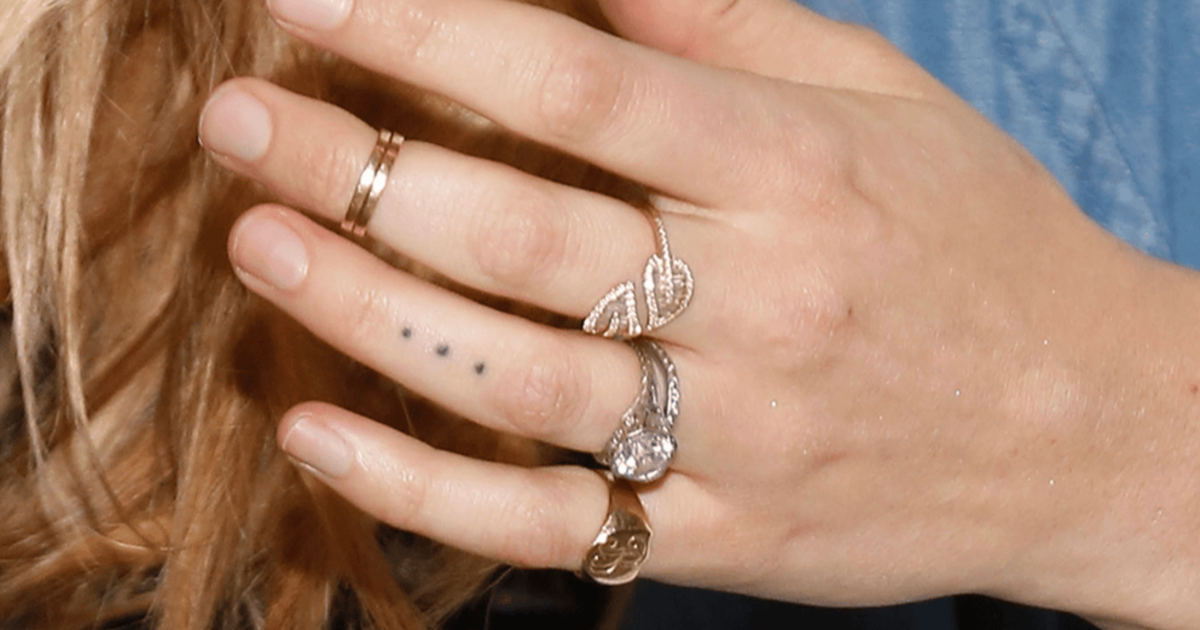
Dots, tears, crowns, and cobwebs can take on very different meanings depending on where and why they are worn.
advertisement
Some familiar tattoo designs have meanings that go far beyond their simple appearance. In certain prisons, gangs, and communities, a few small marks can suggest loyalty, criminal history, grief, or time spent behind bars.
One example is the three-dot tattoo, which is often placed on the hand between the thumb and index finger. In the United States, Ink Ppl says the design has become closely linked with the phrase 'Mi Vida Loca,' which translates to 'my crazy life,' according to Ink Ppl.
The symbol does not belong to one specific gang. Instead, it can suggest that the wearer identifies with a gang-related or criminal lifestyle, although the exact reason someone chose it may differ from person to person.
A small design can mean different things in different places
Tattoo symbolism is not universal. A design that has a serious meaning in one country, prison system, or social group may carry a less specific meaning somewhere else.
Placement can also affect how a tattoo is read. Three dots placed on the hand may be recognized in a different way from the same dots placed on the face, arm, or another part of the body.
This is why one image alone rarely tells the full story. The wearer's background, location, and personal reason for choosing the design can matter as much as the symbol itself.
advertisement
The same three dots can take on a more serious meaning in Russia. There, the design may be used to signal criminal status or a level of trust between people inside prison.
That reputation led one person on X to warn: "If you see someone with a three-point tattoo, run as far as you can,"
Another user reacted to the idea of explaining the tattoo's possible meaning to relatives, writing: "Imagine explaining this to your grandma."

According to C1, one of the most widely recognized prison tattoos is the teardrop, whose meaning shifts depending on where it's seen. In some places, it can indicate that the wearer has served a lengthy prison sentence, while elsewhere it's taken to mean the person has killed someone.
Photo by Gareth Cattermole/Getty Images
Online warnings can leave out important context
Social media posts often present tattoo meanings as fixed rules, but the reality can be less clear. A person may choose three dots because of family, religion, personal history, style, or a meaning that has nothing to do with prison.
The same caution applies to black band tattoos, which have been linked online to several very different ideas. One interpretation should not be treated as proof of a stranger's identity or behavior.
Even so, symbols can still matter in places where they are widely recognized. Someone who unknowingly copies a prison or gang design may find that others read it in a way they never intended.
advertisement
The changing meaning behind a teardrop tattoo
The three-dot design is not the only tattoo with a strong prison reputation. According to C1, the teardrop is one of the most widely recognized prison symbols, but its meaning can change depending on where it appears.
In some places, a teardrop suggests that the wearer served a long prison sentence. Elsewhere, it may be understood as a claim that the person killed someone. An outlined teardrop can instead refer to an attempted murder or the loss of a friend through violence, sometimes with revenge attached to that loss.
Musicians and celebrities have helped bring the design into popular culture, where it may be worn for style or personal reasons. Inside prison, however, it can still carry serious meaning, and newcomers displaying one are said to attract attention or trouble quickly.
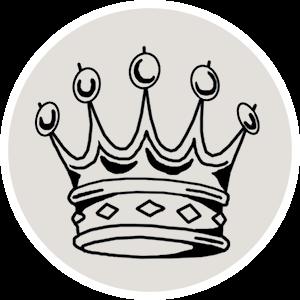
The FIVE-POINT CROWN is a symbol of the Latin Kings gang, one of the largest Hispanic gangs in the United States. The crown may be accompanied by the letters ALKN, which stands for Almighty Latin Kings Nation. The five points represent the gang’s affiliation to the People Nation gang, which uses the number five.
Kentucky Police
advertisement
Filled and outlined teardrops may not mean the same thing
A small detail such as whether the teardrop is filled in can change how some people interpret it. A solid design may be read differently from an empty outline, even when both tattoos look almost identical from a distance.
The side of the face, the number of teardrops, and the local prison culture may also affect the message people attach to it. There is no single meaning that applies in every country or institution.
That uncertainty makes assumptions risky. A teardrop may mark grief, personal hardship, fashion, music culture, or a prison connection, and the tattoo alone cannot confirm which explanation is correct.
advertisement
Another design with a specific gang connection is the five-point crown. It is strongly associated with the Latin Kings, a major Hispanic gang with roots in Chicago.
The crown may appear beside the letters ALKN, which stand for Almighty Latin Kings Nation. Its five points represent the group's connection to the People Nation alliance.
Other parts of the crown can add more meaning. The colors chosen for the jewels and small changes within the design may carry messages understood by members of the gang but missed by people outside it.
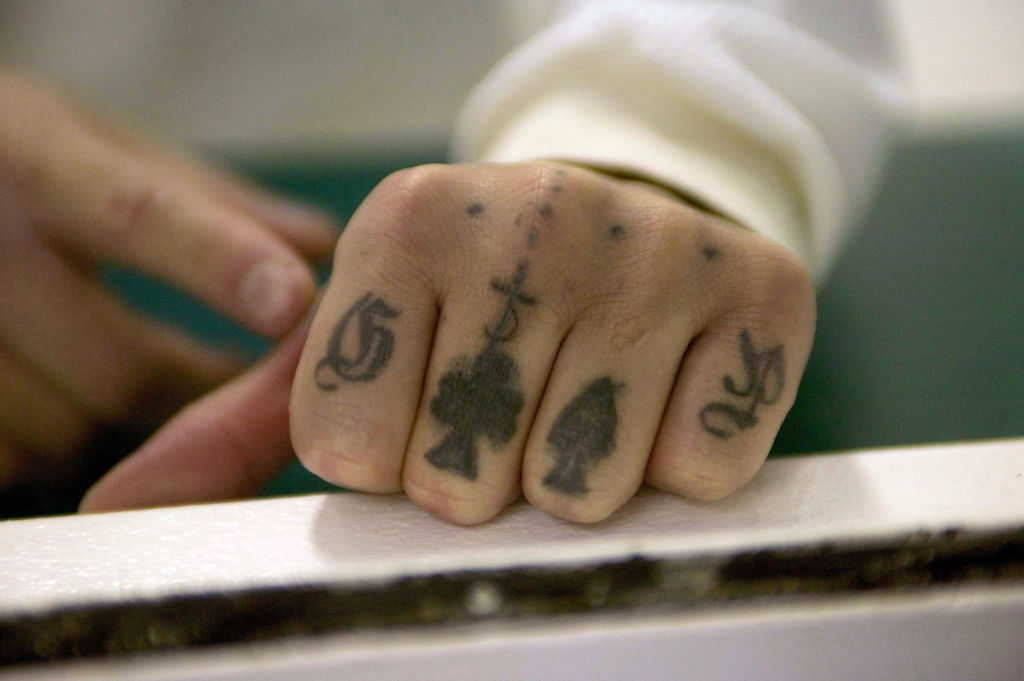
Despite the visual similarity, five dots carry an entirely different meaning to their three-dot counterpart. Known as the quincunx, the design typically features four dots arranged around a fifth, with the four outer dots representing prison walls and the central dot representing the prisoner themselves.
Photo by Robert Nickelsberg/Getty Images
advertisement
Why the crown's small details matter
At first glance, a five-point crown may look like a common symbol of power, status, or confidence. Its meaning changes when it appears with certain letters, colors, numbers, or other gang-linked markings.
Those added details can turn a general crown tattoo into a symbol of membership or loyalty. Someone familiar with the group may notice parts of the image that an outside viewer would overlook.
A crown on its own does not prove that someone belongs to a gang. The full design, its placement, and the circumstances around it all need to be considered before drawing that conclusion.
advertisement
Why five dots do not mean the same thing as three
Although the two designs can look alike, five dots usually carry a different meaning from the three-dot symbol. This arrangement is known as a quincunx and places four dots around a fifth dot in the center.
The four outside dots are said to represent prison walls. The center dot stands for the prisoner enclosed within them, turning the simple pattern into an image of confinement.
The quincunx is often tattooed on the hand between the thumb and index finger. It has appeared among inmates in both the United States and Europe.
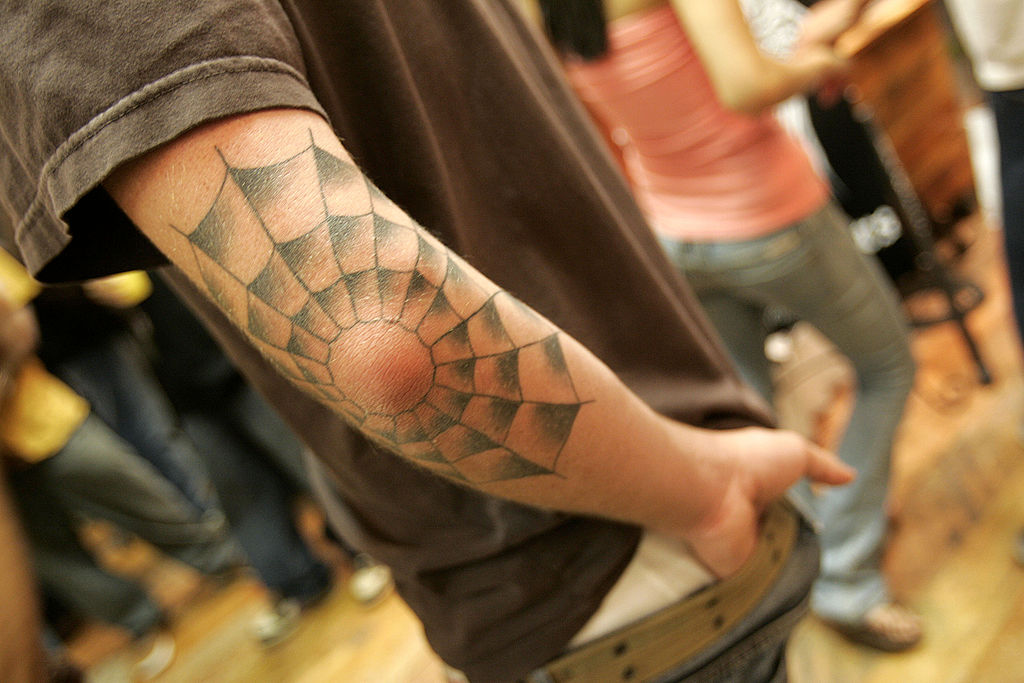
A cobweb design, meanwhile, is generally used to represent a lengthy prison sentence, drawing on the imagery of a spider trapping its prey, or a person effectively trapped behind bars.
Photo by Chris Weeks/WireImage
advertisement
Dot count and layout can completely change the message
Three dots and five dots may be placed in the same area of the hand, but their layouts tell different stories. The three-dot tattoo forms a triangle, while the quincunx uses a four-around-one pattern.
That difference matters to people who recognize prison symbols. Missing or adding two dots can shift the design from a broad reference to a certain lifestyle into a direct image of a prisoner surrounded by walls.
From a distance, though, the marks can be easy to confuse. Looking at the full arrangement is more useful than reacting to the presence of dots alone.
advertisement
Cobweb tattoos are also associated with long prison sentences. The image draws on the idea of a spider trapping its prey, with the wearer represented as someone caught behind bars for so long that escape feels impossible.
The elbow is the most common placement, reflecting the idea of sitting still long enough for a web to form around the joint, although the design can also appear on the neck. C1 notes that the ink itself may offer a clue: a bright, multicolored cobweb is less likely to have been created in prison, where colored tattoo ink is rarely available.
None of these meanings should be applied to every person with a similar tattoo. Prison and gang associations are real in some settings, but placement, culture, available materials, and the wearer's own explanation remain important before judging what the design represents.