

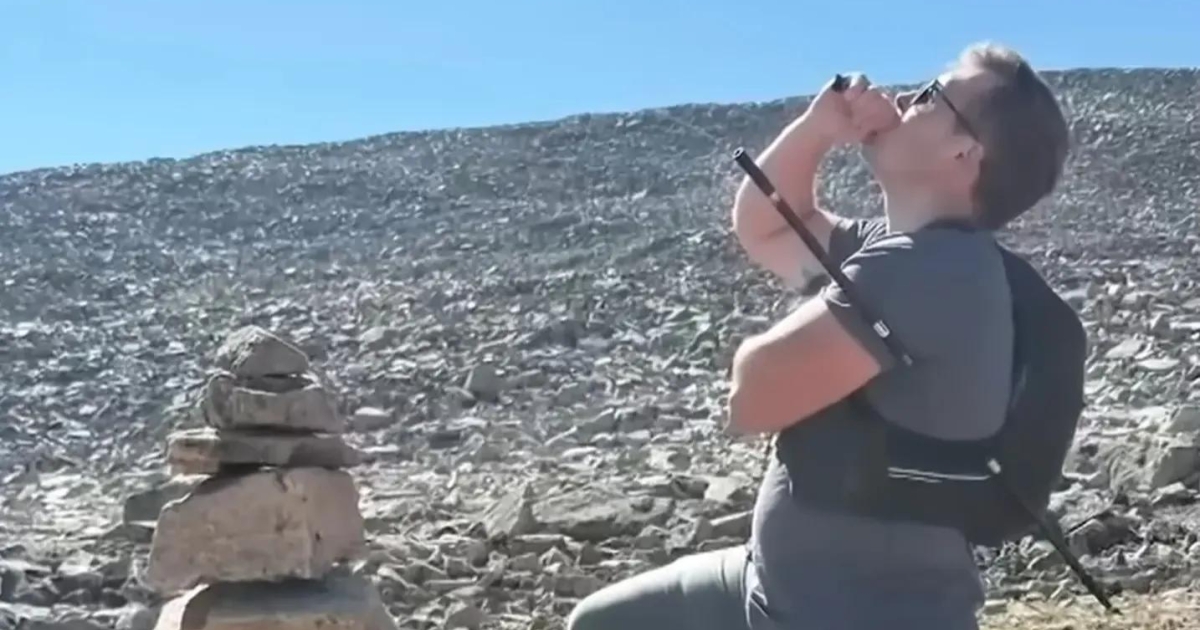
David Cifaldi relied on his emergency-room training after a fall at 11,800 feet left him badly injured deep in the Montana wilderness
advertisement
David Cifaldi expected July 20, 2026, to bring him closer to the summit of Montana's highest mountain. Instead, one misplaced step left the 32-year-old emergency-room nurse facing a serious injury in a remote area with no quick route to a hospital.
Cifaldi had joined friends Jesse Ross and Brad Reich for an attempt on Granite Peak. The group had traveled about 10 miles into the demanding mountain hike when the accident happened at an elevation of roughly 11,800 feet.
They were moving across a rocky section around two miles short of the summit when Cifaldi lost his footing. What looked like a simple slip became a medical emergency within seconds.
Why Granite Peak made the accident harder to manage
Granite Peak rises to about 12,799 feet in the Absaroka-Beartooth Wilderness and is the highest point in Montana. The U.S. Forest Service describes the Beartooth Mountains as rugged country filled with high peaks, steep ground, alpine lakes, and large wilderness areas.
Reaching Granite Peak requires more than a short walk from a parking lot. Climbers can face a long approach, boulder fields, snow, exposed sections, and fast-changing mountain conditions before they even reach the final summit route.
That distance became a major part of Cifaldi's problem. Even after he decided he could move, he still had hours of rough ground between his position and the trailhead where a vehicle could reach him.
advertisement
Cifaldi first stood up believing he had escaped the fall without a major injury. He then realized that he had landed directly on one of his trekking poles, which had passed through the soft tissue below his left arm and was sticking out on both sides of his torso.
Describing how quickly the accident unfolded to KTMF, Cifaldi said: "I just slipped on some rocks. It was just kind of a freak thing."
His medical training took over once he saw the wound and checked his condition. "I think my nurse brain clicked on. As soon as I was able to self-assess and establish that this was not life-threatening right now, I was pretty convinced I was going to get off that mountain under my own power."
Cifaldi later told Backpacker that the pole appeared to have passed through his lat muscle without hitting his chest or abdomen. Based on the location, his breathing, the bleeding, and his ability to move, he believed he had suffered a severe soft-tissue injury rather than damage that would immediately threaten his life.
He chose not to pull the pole out. Instead, the group kept it in place, used part of his vest to help support it, and began the roughly 10-mile journey back toward the trailhead while watching for changes in his condition.
"At that point, I was up moving around, walking a little bit, and I was pretty confident that I could keep moving," Cifaldi added to Backpacker.
advertisement
Why leaving the trekking pole in place mattered
Cifaldi's decision not to remove the pole matched standard advice for a deeply embedded object. Removing one outside a medical setting can disturb damaged tissue or release bleeding that the object had been helping to limit.
Mayo Clinic first-aid guidance says large or deeply embedded objects should not be pulled out. The object should be supported to limit movement while emergency help is contacted, and pressure should be placed around the wound rather than directly on the object.
Cifaldi's self-rescue was shaped by his medical experience, his own assessment, and the group's remote location. It should not be treated as normal advice for an impalement injury, which requires urgent medical care and can involve hidden bleeding or organ damage even when the injured person remains awake and able to walk.
advertisement
Ross later described the descent on a GoFundMe created for Cifaldi's recovery. One friend used a satellite communicator to alert search-and-rescue services, while the others worked together to help Cifaldi cross the difficult terrain.
"David navigated the plateau's snowfields and boulder fields, made his way down past Mystic Lake, and reached the trailhead entirely under his own power — never once complaining, staying in remarkably high spirit," Ross stated.
Cifaldi remained aware of the people around him despite the pain and the graphic nature of the injury. "Near Mystic Lake, he even asked one of us to hike ahead and warn other hikers, so no children would have to see the wound."
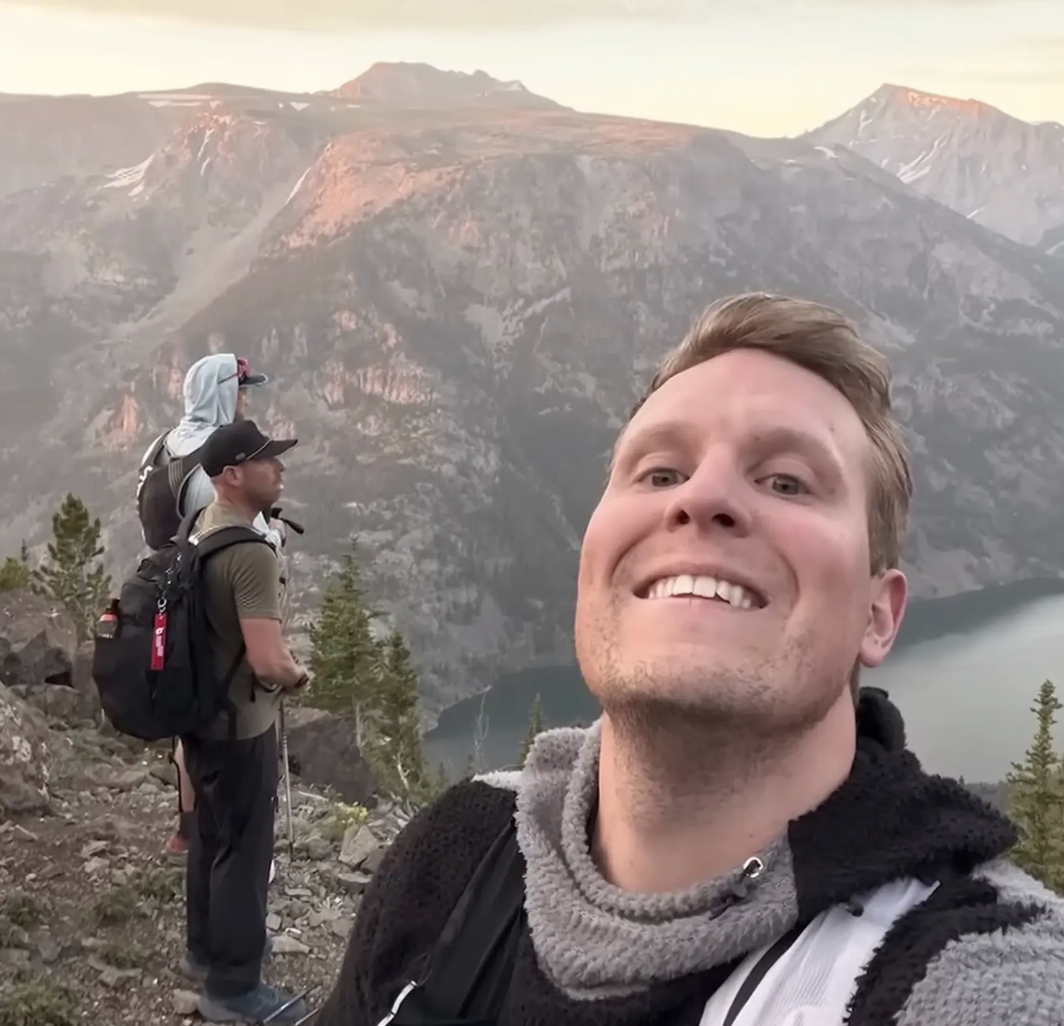
David Cifaldi was hiking with two friends
YouTube/KCEN
advertisement
How his friends helped during the descent
The group could not simply walk down a smooth trail. Cifaldi had to cross snowfields and large areas of loose rock while keeping the trekking pole as still as possible and avoiding another fall.
His friends watched the wound for signs of heavier bleeding and stayed close enough to support him when the terrain became difficult. Their satellite device also gave them a way to contact rescuers despite being far from reliable phone service.
Humor helped them manage the stress. Backpacker reported that the group began making kebab jokes after Cifaldi showed that he could stay on his feet, but they continued taking the injury seriously throughout the descent.
advertisement
Cifaldi finally reached the trailhead after walking for about six and a half hours with the pole still through his body. He was driven to a hospital and later transferred to Intermountain Health in Billings, where medical staff removed the pole under controlled conditions.
Doctors found that the pole had narrowly missed the structures that could have made the accident fatal. Cifaldi told KTMF that he felt 'lucky' because a 'couple inches the other way, this would be a different story'.
He continues to receive treatment and may require another operation as his wound heals. The GoFundMe was created to help with medical costs and damaged equipment, while Cifaldi has said he hopes to recover well enough to return to Granite Peak and complete the climb in 2027.