

Strap in, folks, it's time to learn about quantum mechanics.
Scientists Have Discovered That Time Is Just An Illusion
By
maks in
Science and Technology
On 13th June 2024
advertisement
If you thought 2024 couldn't bring any more surprises, think again. Scientists are now suggesting that time might just be an illusion. Yes, you read that correctly.
Researchers are proposing that time might not be a fundamental aspect of our universe but rather a construct born from 'quantum entanglement'.
Now, you might be asking yourself, what exactly is quantum entanglement?
Quantum entanglement is a fascinating phenomenon in the world of physics where pairs or groups of particles interact in such a way that the state of each particle cannot be described independently of the others, even when the particles are separated by large distances.
advertisement
It's as if these particles are invisibly connected, no matter how far apart they are.
This interconnection allows for the instantaneous sharing of state information between entangled particles, which, though it sounds like something out of a science fiction story, is a real scientific phenomenon.
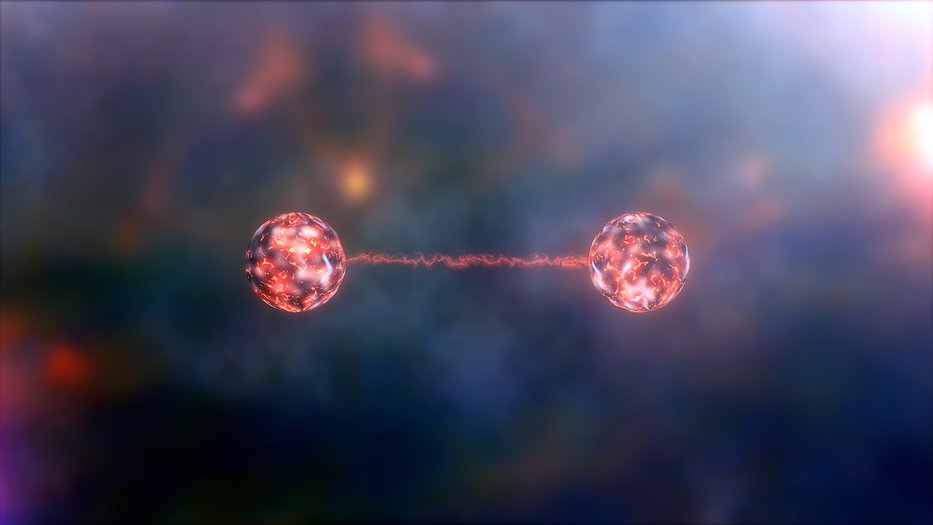
The theory suggests that our perception of time comes from the entanglement of objects with a reference clock.
Researchers argue that to an observer outside the universe, everything would appear to be still.
Initially, scientists thought that time was intertwined with the fabric of space and could be influenced by gravity, as anyone who has seen the movie "Interstellar" would understand.
advertisement
However, this new perspective from quantum mechanics challenges that idea, suggesting time may not be as flexible as previously thought.
This could fundamentally alter our understanding of time.
advertisement
Despite this being an intriguing concept that challenges the foundation of how we perceive our lives, it comes with its challenges.
One major question is, how do we verify this?

Scientists now believe time is a construct of quantum entanglement.
Getty Stock Images/ Shapecharge
There isn't a straightforward way to test this theory with visible results, so maybe we shouldn't discard our current understanding of time just yet.
advertisement
Alessandro Coppo and his team have shared their insights in a paper published in the journal Physical Review A.
They explore the possibility that our experience of time might be a secondary effect of quantum processes.
advertisement
Although this theory is still in its early stages, it holds the potential to revolutionize our understanding of the universe and its workings.
Coppo stated, "For centuries, time has entered physics as an essential ingredient that is not to be questioned.
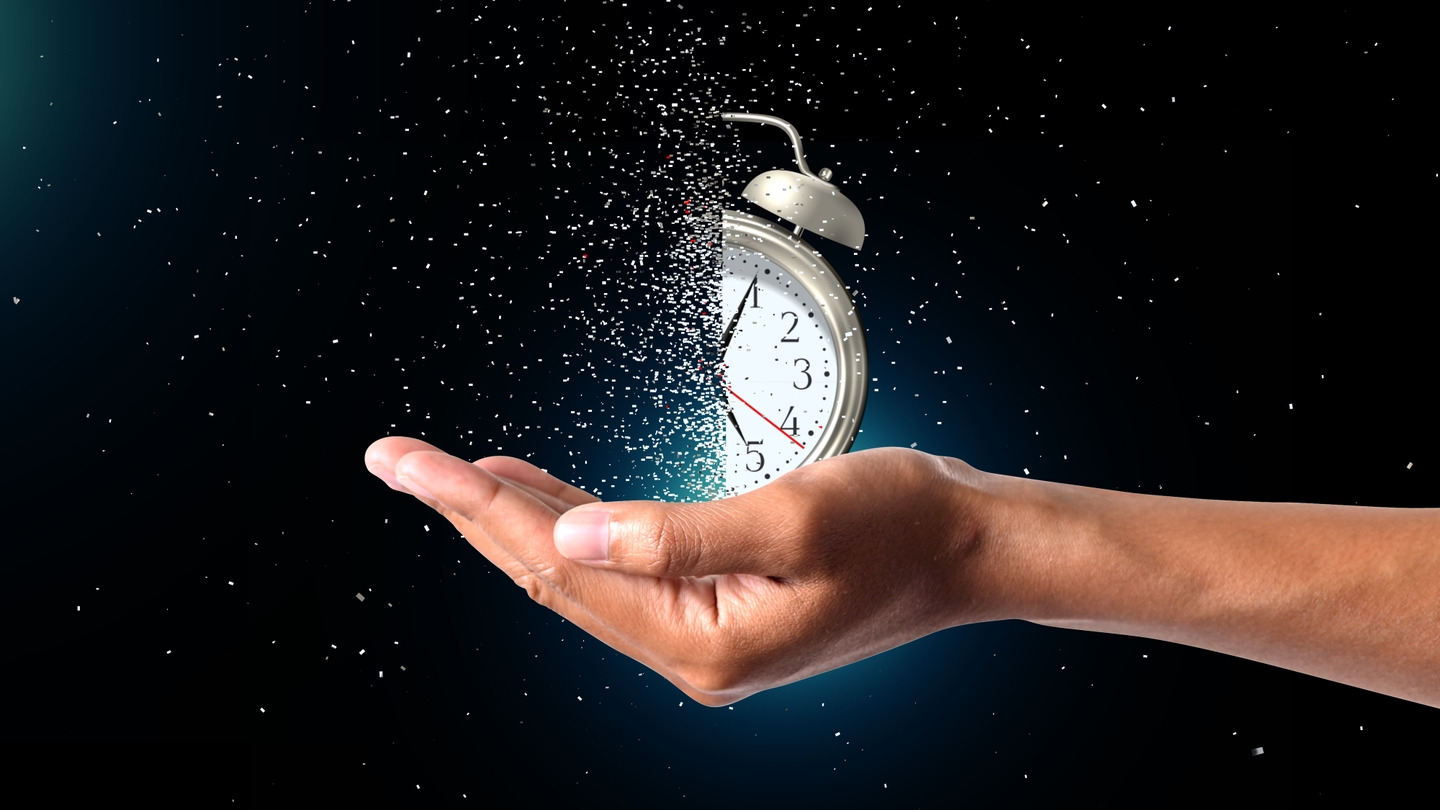
Time could be based on how particles influence each other, regardless of distance between one another.
Getty Stock Images / iNDU BACHKHETI
"It is so deeply rooted in our conception of reality that people thought that a definition of time was not needed. We believe that nature is genuinely quantum."
advertisement
Previously, time was seen as a measure of changes in physical quantities, a way to quantify the duration of events.
Now, it might be just a side effect of quantum mechanics, closely tied to quantum entanglement.
Isn't that wild? Does this mean we might soon be tossing aside our watches?