

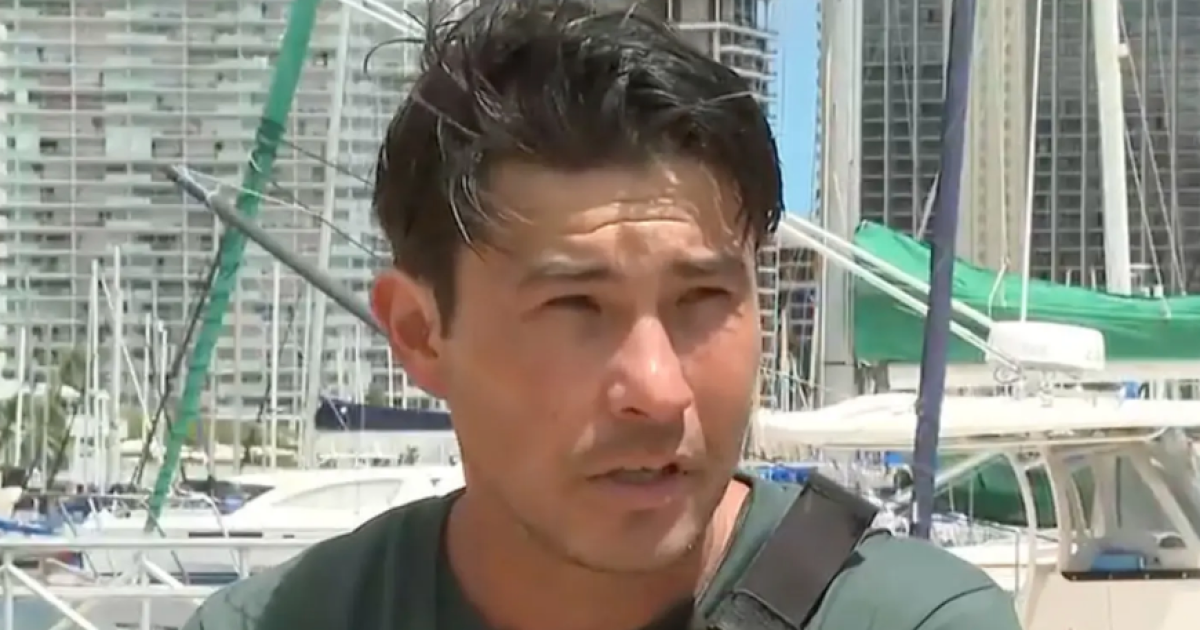
A broken mast, dead phone, and empty water supply left the California sailor drifting hundreds of miles from help
advertisement
Kaichi 'Kai' Sato was found alive after spending 30 days adrift in the Pacific Ocean. The 39-year-old California sailor had vanished during what was meant to be his first solo crossing, leaving him far from land with a damaged boat and no clear way to call for help.
Sato left the Catalina Islands on June 7, hoping to complete a solo voyage across the Pacific. About two weeks into the trip, strong winds and rough seas snapped the mast on his 32-foot sailboat, taking away his main way of controlling the vessel.
His phone, which he had been using for navigation, also stopped working. Sato tried to turn back toward California under motor power, but the fuel ran out while he was around 500 miles from the coast. He told Hawaii News Now that he 'cried for a whole week, just drifting south' as the current carried him farther off course.
At his lowest point, the isolation and lack of control left Sato struggling to see a way out. He said: "I felt like I was going to just try to turn my motor on and just suffocate, to kill myself, I felt hopeless."
The current kept pulling his disabled boat away from the route he had planned. Describing how powerless he felt, Sato added: "I was literally like a sitting duck, just getting taken south by the current going way off course."
After several days of despair, he began working with whatever equipment remained. Sato used PVC pipes and kayak paddles to make rough repairs and help guide the boat back toward commercial shipping lanes. His food was limited to oatmeal and whatever fish and squid landed inside the vessel.
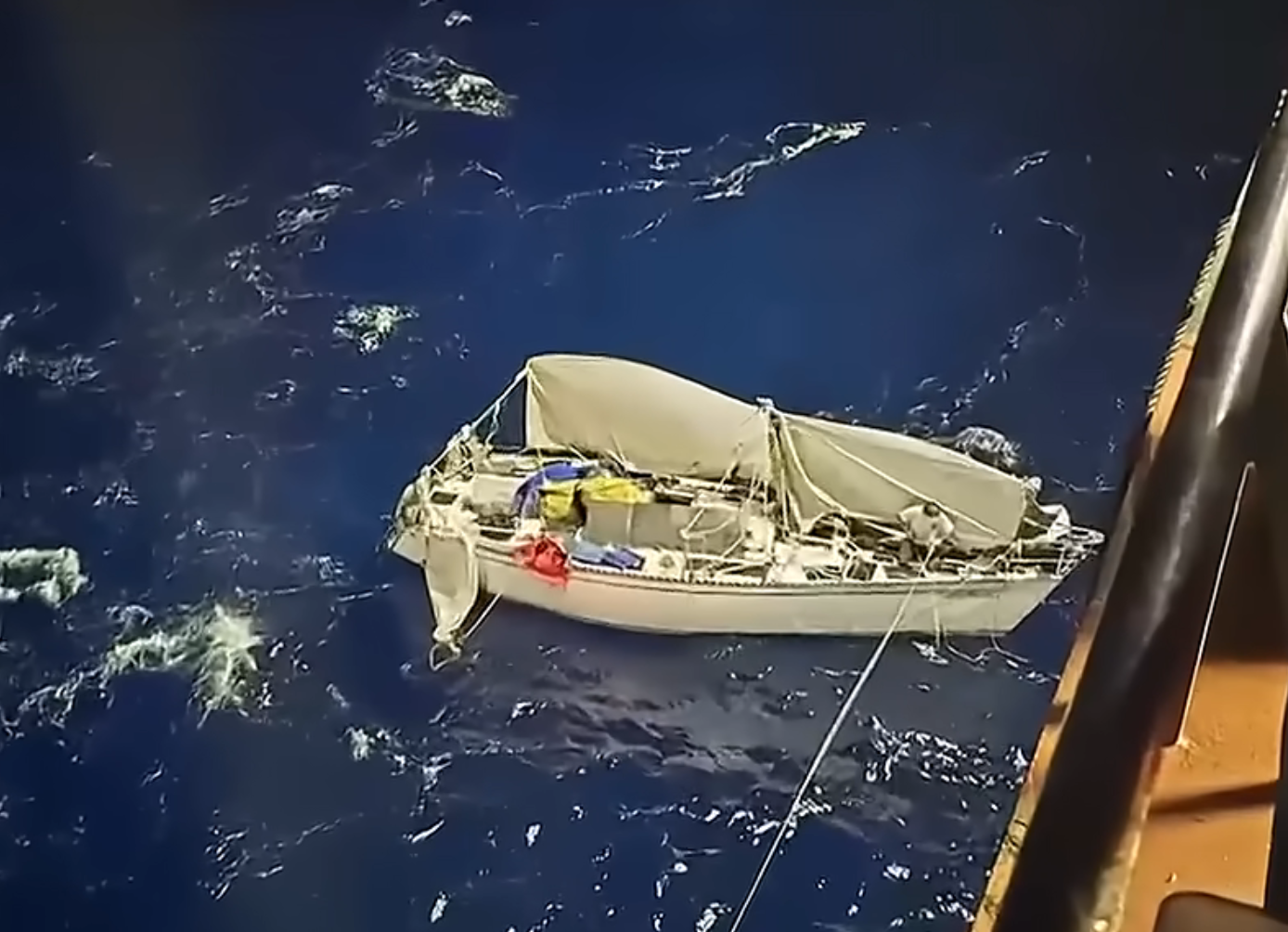
Fortunately he was spotted by a container ship and rescued
Hawaii News Now
advertisement
How he kept moving without a working mast
Losing a mast left Sato unable to use the sailboat as intended, while the empty fuel tank ruled out a return under engine power. His next best option was to build a basic rig from the loose materials he still had on board.
The kayak paddles and PVC pipes gave him some control, but they could not restore the speed or handling of a proper sail. Sato spent weeks trying to move north and place himself closer to the shipping route used by vessels traveling between California and Hawaii.
That route offered his best chance of being seen. With no working navigation phone and hundreds of miles of open water around him, reaching an area used by large commercial ships mattered more than following his original course.
Fresh water became the next crisis. After about 20 days, Sato used up his remaining drinking supply and began placing plastic over containers to catch condensation. The shortage left him dealing with serious dehydration, and he later said he was 'just licking that to survive'.
His efforts eventually brought him into the shipping lane. On July 21, after roughly a month at sea, the crew of the container ship M/V George III spotted his damaged boat about 900 miles from Hawaii.
The Seafarers International Union described the moment the crew responded: "All hands were called to assist in the recovery of solo sailor Kaichi Sato aboard his de-masted 32ft sailboat approximately 900 miles from Hawaii."
advertisement
How the George III crew reached the disabled sailboat
Watchstanders aboard the George III noticed the small vessel in distress and alerted the rest of the crew. The container ship changed course while sailors prepared its engines for careful maneuvering near Sato's much smaller boat.
Crew members rigged a pilot ladder and readied life rings, messenger lines, and line-throwing equipment. Once the ships were close enough, they fired a line toward Sato. He secured it to the stern of his sailboat, allowing the crew to pull the vessel alongside the ladder.
Sato then stepped from his boat and climbed aboard the George III. The operation took around 90 minutes from the first sighting to his recovery, and the ship's captain reported that nobody was injured during the rescue.
advertisement
Once Sato was safely on the container ship, the crew said he 'expressed his thanks and gratitude to the entire crew of the George III for saving his life'.
The sailors gave him fresh water, fruit, clothing, and a clean place to sleep. Members of the ship's steward department also prepared a hot meal after Sato had spent weeks surviving on small amounts of oatmeal and sea life.
The difference was immediate. After a month of trying to ration every drop and guide his own disabled vessel, Sato was finally surrounded by people who could feed him, care for him, and take him toward land.
advertisement
"Oh my god, yeah, like ecstatic," Sato said while describing the moment he understood that the ordeal was over.
"I was crying, so happy, they went and got me fruit and water. They were so good to me, those guys."
Sato later went to stay with a relative in Hawaii. Despite everything he had endured, he has not given up on sailing and said he wants to attempt another trip to the Philippines. This time, however, he plans to use a larger boat.
advertisement
What can help when a phone stops working offshore
Reports on Sato's rescue do not confirm every piece of emergency equipment he had on board. However, the US Coast Guard's boating guide warns that cell phones should not replace recognized maritime distress systems, especially during offshore trips.
One option is an Emergency Position-Indicating Radio Beacon, commonly called an EPIRB. NOAA's SARSAT program explains that a registered 406 MHz beacon can send a distress alert through satellites and help search-and-rescue teams locate a vessel.
A beacon cannot stop a mast from breaking or an engine from running out of fuel. Its purpose is to alert rescuers and provide a location when normal communication and navigation tools no longer work, which can be crucial far from shore or regular boat traffic.
advertisement
Sato appears to have taken one lesson from Jaws to heart: before trying another long ocean crossing, he is going to need a bigger boat.
His month at sea was an extraordinary test of survival, but it falls well short of the longest known case involving a person left adrift in a small boat. Salvadoran fisherman José Salvador Alvarenga survived for 438 days, becoming the first recorded person to last more than a year in those conditions, according to History's account of the voyage.
Alvarenga had gone on a fishing expedition in the Pacific with Ezequiel Córdoba when they were caught in a storm that lasted about a week. Water flooded their boat, the engine stopped working, and the two men could no longer return to the coast.
advertisement
Córdoba died after around 10 weeks at sea, leaving Alvarenga to continue the journey alone. With no motor or working communication equipment, he remained at the mercy of the Pacific currents.
Alvarenga eventually reached the Marshall Islands, where local residents found him and brought help. By then, he had crossed thousands of miles and spent 438 days away from land.
Sato's rescue came far sooner, but both ordeals began with equipment failure and became battles for food, water, direction, and the chance of being noticed in a vast stretch of ocean.