The Horror Of "Body Dysmorphic Disorder" The Disease That Melts The Skin
By
Johny in
Bizarre
On 3rd December 2015
Body Dysmorphic Disorder (BDD) is probably something most of you have never heard of, and yet it affects 1 in 100 people in the UK.
Imagine spending every day believing you look and appear much more distorted than you really do, and over time, the anxiety of your physical appearance builds, until being around people becomes an overwhelming panic.
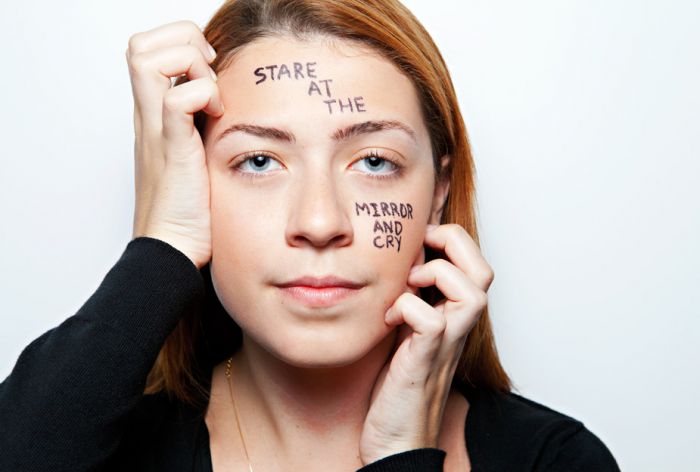
For the people that suffer from BDD, the condition can manifest itself in a number of ways. From starting off through the constant checking of how they look in a mirror, to avoiding reflective surfaces altogether.
#1 In extreme cases, sufferers can physically attack their bodies in an effort to “improve” them, or even book themselves in for repeated cosmetic surgery procedures. And sometimes the depression caused by this dominating disorder can lead to the individual taking their own life.And despite the few celebrity connections – such as Michael Jackson and Andy Warhol – the condition is still very much misunderstood in today’s society, and people can often naively believe the individuals are vain. In fact, it wasn’t until 2013 that BDD was recognised on the ‘Obsessive-Compulsive Spectrum’.This condition destroys lives, and like any mental disorder, it is important the public are made fully aware of the facts surrounding BDD, and now, two artists, Liz Atkin and Leigh de Vries, are channeling their inner obsessions and fears, and turning them into striking and thought-proking pieces of photography, performance and film.Atkin, is a long-term sufferer of BDD, and has been compulsively picking her skin since she was eight-years-old. It was triggered by conflicts within the family home.
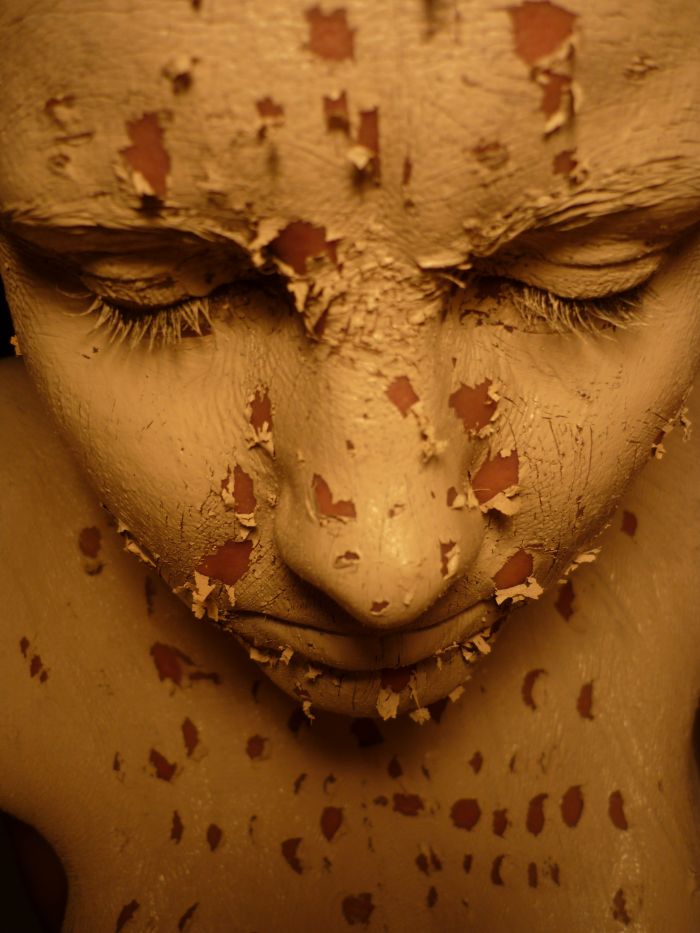
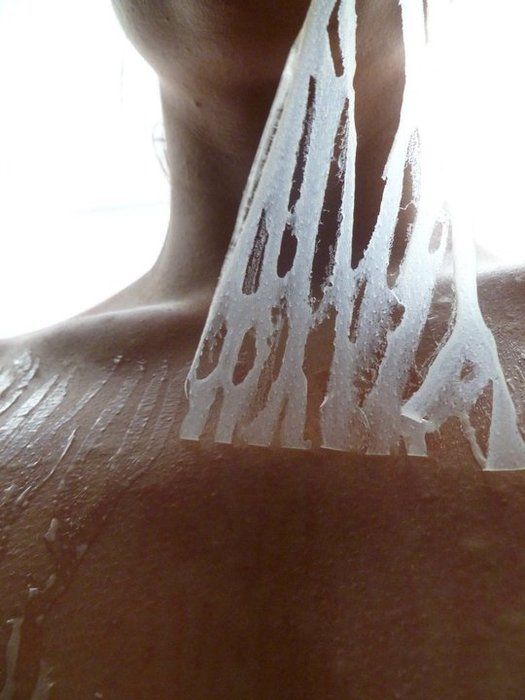
#2 Originally training in dance and drama, Atkin realised she had could both conquer and utilise her condition within a study project. She stated;“I had to confront the illness head-on when I started a masters degree in dance when I was 29, and it was then that I realised I could use the illness and study it in terms of a movement pattern in and on my body. I had no idea that was going to turn this disorder around… it was life changing.”Using a flat-bed scanner and whatever else she could lay her hands on – milk, hair, paint, glue etc. – Atkin started recording her own image, until she became fascinated with the difference surfaces and textures of her body, spending more time on those areas she had previously obsessed over.This year, London University hosted the very first Body Dysmorphic Disorder Foundation Event. One of the experts who appeared was Dr David Veale, where he held a discussion on how self-portraiture could benefit those suffering with the condition.Dr. Veale revealed that when a person with BDD or OCD has an anxiety attack, their brain attempts to feel “safe” by focusing on something – hair, skin, legs, etc. – and repeatedly obsess over it in order to make themselves feel calm. For example, in the case of Dermatillomania (skin picking), the individual often feels like they have entered a soothing, trance-like state.This was something Atkin was determined to capture:
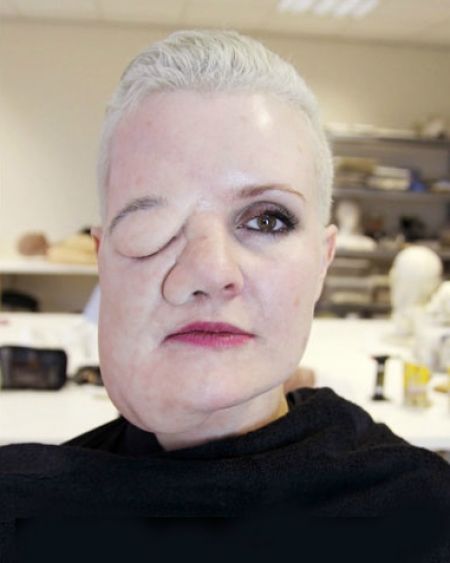
#3 Like Atkin, De Vries has also been plagued by constant worries about her appearance since she was a teenager.Now a musician, she also discussed the point where she realised she couldn’t continue her life being dominated by the disorder;“In all the projects I worked on up until this point, I was putting out how I wanted the world to see me. But because of my BDD, weeks before a photo shoot, video shoot or going into the studio to sing, my BDD would really attack me on multiple levels. It got to a point where I isolated myself in my house for a few months – I didn’t even make contact with anyone. Then it came to me: ‘Why don’t I express this through my art?'”De Vries came up with Exposure – The Broken Reality Tunnel, a walk-in, video and audio installation, located in a two room box.In the rooms, there are two videos playing of her walking around Manchester town centre wearing a prosthetic face piece. The two video rooms are connected by dark tunnels, where the voices of de Vries and other BDD sufferers talk about the condition.
#4 The overall affect of the piece showcases exactly what it’s like to be trapped within your own thoughts. De Vries also commented on what she was hoping to achieve and the overall outcome;“I wanted to create the monster I perceived myself to be and physically wear it in public to create some mending in my mind by having the actual experience. When we have something in our mind, versus the physical, the version in your mind is way worse.I imagined I looked like someone with Elephantitis, with huge growths coming out of my face and body. The closest we got was a huge tumor growing out of my face. I had the idea to work with secret cameras – I wanted to capture my own journey of isolation but also make a social commentary on how people react to people with deformities.We had these great secret cameras called pivot heads, on glasses that have full HD and motion, and I had a little button camera on my blouse so we had three camera points. It was possibly the scariest day of my life so far.”
#5 Both of the artists have used their passion for the arts to combat their conditions, without the need of professional help, and both sought contact with other sufferers of the condition in order to perfectly portray exactly what living with BDD feels like.They have also worked directly with the Body Dismorphia Disorder Foundation.De Vries commented exactly how beneficial it’s been to claim some control over her condition, and how it’s not only allowed for other sufferers to come forward and talk about their condition, but also find comfort and support in their work;“It’s quite beautiful in that way, that by revealing my darkest secret, I’m with it in a compassionate way and instead of being ashamed, I’m proud. I feel revealing the chaos means I feel closer to people and people feel closer to me – it’s kind of like this weird way of saying ‘I’m fucked up.’ And people then say ‘Oh my God, so am I!'”
Both Atkin and de Vries now wish to continue to use their work to support others, and have since become deeply involved in outreach groups, in particular, working with younger individuals, as they know from experience how early BDD can first take control of a person.
Body Dysmorphic Disorder can plunge people into an extremely dark place, but knowing their not alone is so important to feeling supported. Both Liz Atkin and Leigh de Vries have not only spoken out about their experiences with the condition, but through their stunning work, have also proved that pretty, doesn't always mean beautiful.