This Is What Happens Inside Your Body One Hour After Drinking A Can Of Diet Coke
After the recent incredible popularity of the infographic showing what may happen to you after one hour of drinking a can of regular coke now comes a similar infographic about diet coke.
Diet Coke was the second best-selling soft drink in the US last year, but sales have dropped since more people have become aware of its apparent health risks, according to new figures by trade publication Beverage Digest.
A Coca-Cola spokesman gave this statement as their official response to my previous article that made the headlines.
“People have enjoyed drinking a Coca-Cola for more than 129 years. Like all soft drinks, it is perfectly safe to drink and can be enjoyed as part of a balanced diet and lifestyle. We provide a choice of cola's to meet the needs of different consumers, including options that are lower sugar, sugar-free and caffeine-free.”
But is this true?
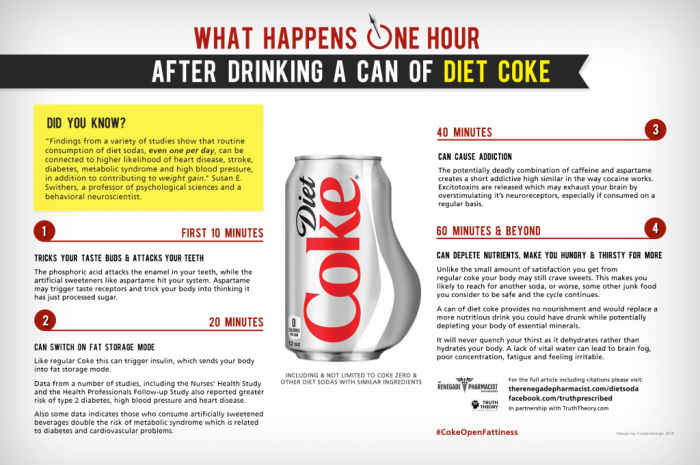
Your taste buds get tricked.
The artificial sweetener, aspartame, tells your body to get in sugar processing mode even though there's no actual sugar.
Research, including studies from Swithers and colleagues, shows that frequent consumption of high-intensity sweeteners may have the opposite effect by confusing the body's natural ability to manage calories based on tasting something sweet.
You teeth are attacked.
The acid in the soda attacks your teeth relentlessly.
According to a report published in the March / April edition of General Dentistry, phosphoric acid in soda causes tooth enamel erosion, even with minimal exposure.
Your body goes into fat storing mode.
The sweet flavors trigger insulin in your body, which can contribute to Diabetes.
Artificial sweeteners, and sugar alcohols (another type of low-calorie sweetener) present in diet colas can all interfere negatively with natural gut bacteria that is part of your immune and digestive system, according to Amanda Payne of Switzerland's Institute of Food, Nutrition and Health
Data from a number of studies, including the Nurses' Health Study and the Health Professionals Follow-up Study also reported greater risk of type 2 diabetes, high blood pressure, heart disease and metabolic syndrome, which is related to diabetes and cardiovascular problems, for consumers of artificially sweetened beverages. Some data indicated that those who consumed artificially sweetened beverages had double the risk of metabolic syndrome compared to non-consumers.
Addiction sets in.
The potentially deadly combination of caffeine and aspartame creates a short addictive high similar in the way cocaine works. Excitotoxins are released which may exhaust your brain by overstimulating it's neuroreceptors, especially if consumed on a regular basis.
Excitotoxins are shown to freely penetrate certain brain regions and rapidly destroy neurons by hyperactivating the NMDA subtype of Glu receptor in studies.
Cravings for more coke are explained by the release of two neurotransmitters in the brain, dopamine and glutamate.
Caffeine and aspartame increases dopamine levels as shown in various studies.
Aspartic acid taken in its free form (unbound to proteins), significantly raises the blood plasma level of aspartate and glutamate.
Researchers say glutamate is more essential to addiction than dopamine.
Soda depletes nutrients.
When you're consuming soda, there's less room for the good stuff.
"Some of the connection to metabolic disease could be related to how people behave by saying to themselves, ‘I'm having a diet soda, so this cheeseburger is OK.' says Swithers
Diet Coke will make you hungry.
Since you didn't consume real sugar, your body will still crave those sweets.
Marisa Peer rated by Men's Health as Britain's Best Therapist, a behavioural psychologist and a world renowned expert in eating disorders confirms this, "It is very common to see clients who are overweight who drink diet coke who then eat a plate of chips or reach for the cake. This is because drinking a ‘diet drink' like diet coke makes them feel it is now ok to eat whatever they want.'
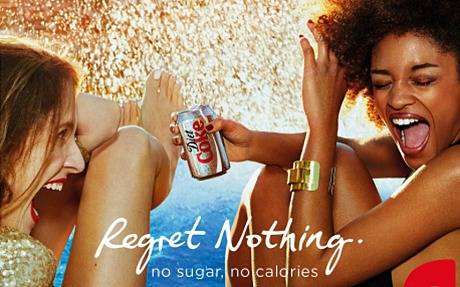
Regret nothing?
I find it hard to believe the coke marketing sleep at night when they created the tagline: "Regret Nothing: no sugar, no calories"
‘Artificial sweeteners are associated with a drop in the appetite-regulating hormone leptin. Leptin is the hormone that inhibits hunger so diet drinks like diet coke actually make you hungry and less satisfied with normal amounts of food, and finally when you eat or drink a lot of chemicals that your body simply cannot break down, your body makes more and more internal fat to wrap the chemicals in keeping those harmful chemicals away from your vital organs. As diet coke has no calories and no recognised ingredients we know it is a cocktail of chemicals that encourage your body to gain and store weight especially on your legs and bottom away from your organs. diet drinks are not good for your body your health or even as it turns out for dieting.'
#8 More Hidden Dangers
A can of diet cola contains 44-62mg of phosphoric acid, more than in many other soft drinks and researchers at Tufts University in Boston showed that women who regularly drank three or more cans a day had four per cent lower bone mineral density in their hips compared to those who preferred other soft drinks.
Phosphoric acid has also been linked to lower bone density in some studies, including a discussion in the American Journal of Clinical Nutrition.
Sodas can contribute to heart disease.
Why risk it? In experiments at Harvard University, it was found to make skin and muscles wither and to damage the heart and kidneys over time.
Phosphoric acid has been associated with urinary changes that promote kidney stones and drinking 2 or more colas per day is associated with increased risk of chronic kidney disease caused by a combination of phosphoric acid, caffeine and other additives.
Chronic consumption of aspartame can lead to potentially harmful side effects to your body, and the long term effects in humans are still not certain, although recent studies in animals prove its damaging effects, especially to the brain.
Get soda out of your life.
Do you really want to be a guinea pig on trial just so you can still enjoy your favorite drink, or do you think it makes sense to find more natural and safer alternatives, and see diet soda as a treat to be had once in a while?
Do you really want to be hooked on a drink like diet coke anyway given all the apparent risks from a variety of sources and anecdotal evidence from many experts?
Please do your own research, do not take my word as gospel. Look at all the evidence out there, so you can make a well informed decision. Skip the heart and kidney disease and protect yourself against diabetes, bad teeth, and addiction.
Here is a full diagram of what happens just to remind you.