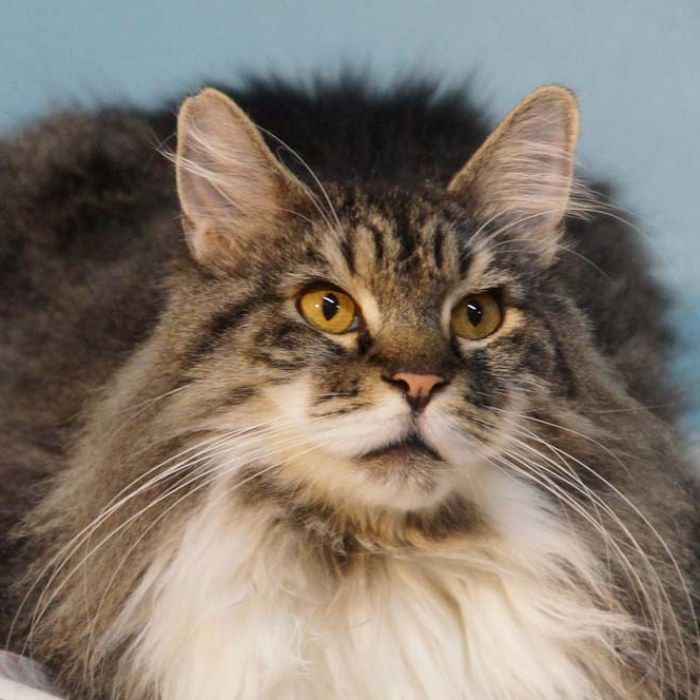
Cat hair ends up on furniture, floors, our clothes, and inside and outside of our luggage
Cat hair also goes where we don't expect it, because individual hairs can float in the air. Cats also can go where dogs can't, so you'll find it in more places even surprising ones. I have found cat hair in my coffee cup, on the stove where my cats aren't allowed, and even stuck to my lips after applying lip gloss.
What are all those cat hairs?
Guard hairs: These are from the topcoat that protects cats from rain or snow; Abyssinians and Domestic Shorthairs have mostly these types of hairs.
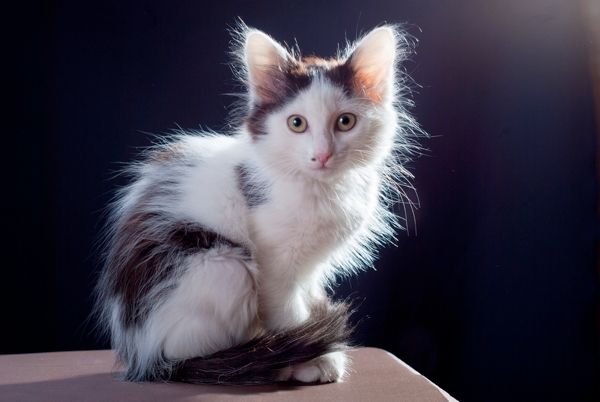
Awn hairs: This soft, fuzzy belly hair that keeps cats warm and provides insulation; Persians and many long-haired cats have this in abundance, not just on their bellies.
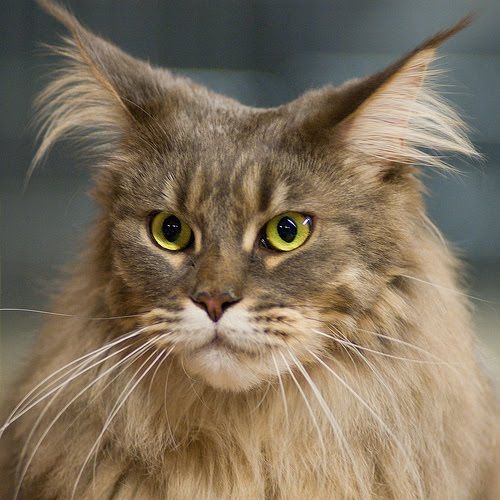
Down hair: These dnse, very short hairs close to the skin protect it from abrasion; only triple-coated cats, such as Siberians and Norwegian Forest Cats, have this type of hair.
Let’s face it. Cat hair is everywhere. So here are some things to help you deal with it.
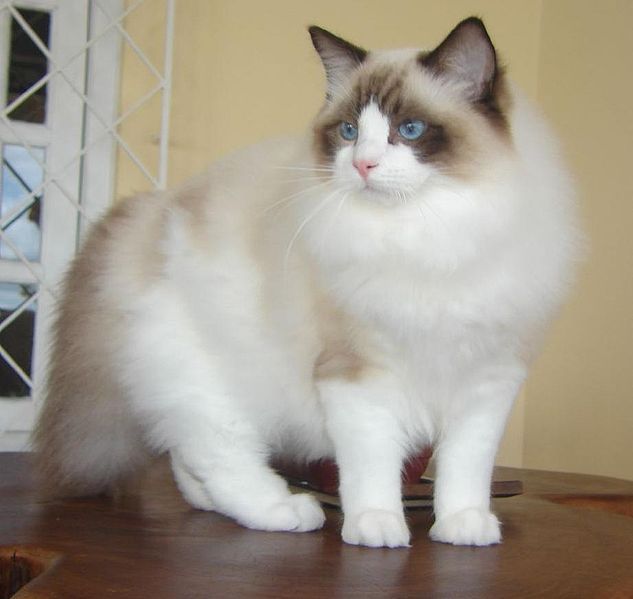
1. Accept that cats shed — it’s normal
For cats, shedding is "a normal process of hair growth and replacement," said Dr. Jane Brunt, a vet who founded the Cat Hospital of Towson in Baltimore and served as past president of the American Association of Feline Practitioners.
Unlike with humans and certain dog breeds, cat hair grows to a fixed length, dies, and falls out as it's replaced by a new hair, explained Dr. Gary D. Norsworthy, board-certified feline specialist and owner of the Alamo Feline Health Center in San Antonio.
"That is why cats do not need regular haircuts," he said.
Cats who go outdoors shed more in the spring, and new hair growth will accelerate in the fall and winter.
"However, about 80 percent of my patients literally never go outdoors, so they are not as aware of seasons. This means there is not a significant difference in seasonal shedding in indoor-only cats," Norsworthy said.

2. Cats can shed too much
Stress, parasites such as fleas, a poor diet, and certain diseases can cause cats to shed more than normal.
"Diseases that affect the entire cat such as diabetes, hyperthyroidism, and kidney failure are more likely to increase shedding," Norsworthy said. "When the cat has significant illness, the hair coat suffers first."
Because of this, don't assume that an excessive amount of hair loss is a skin or coat issue, Brunt said. Arthritis and obesity can cause a cat to be unable to groom normally, which might cause coat abnormalities. Food allergies can cause itchiness, excessive grooming, and hair loss.
"This can be a bigger problem than a normal shed cycle or grooming issue, so absolutely get your veterinarian involved," she said.
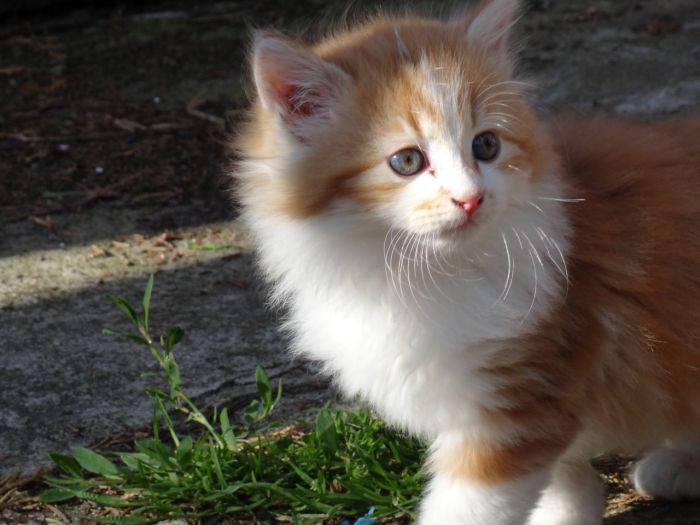
3. Feed your cat a healthy diet
If your cat is eating a complete and balanced diet, and drink
ing enough water, then her coat should be shiny and healthy. On the other hand, a malnourished
 or dehydrated cat would show it in a dull coat, excessive hair loss, matted hair, dandruff, or an excessively oily coat. Skin is the body's largest organ, Brunt explained. If your cat eats a healthy diet and drinks enough water, you will see it in her gorgeous coat. A normal, healthy cat takes in the amount of water she needs.
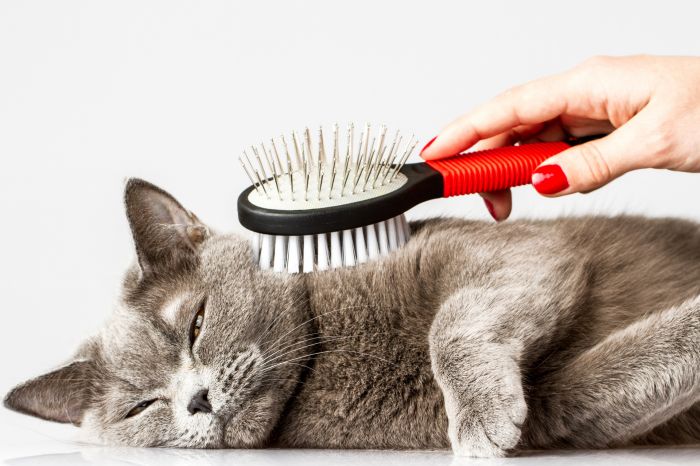
4. Pet your cat with purpose
Normal petting is enough to remove shedding hair for some cats. Joan Miller, Cat Fanciers' Association chair of outreach and education and all-breed judge emeritus, grooms cats by petting. The former Abyssinian breeder dribbles a little room-temperature bottled water into her hand and pets the cat's coat until dry.
"I never used a comb or brush on my Abys," she said.
Dead hair comes off of the cat's coat during petting, Miller said.
"All that's left is shiny new hairs," she said.
Miller also recommends wet-hand petting for Orientals, Domestic Shorthairs, Tonkinese, and other cats with mostly guard-hair coats. Persians and other long-haired cats, on the other hand, have an abundance of awn hairs and need to be brushed daily.
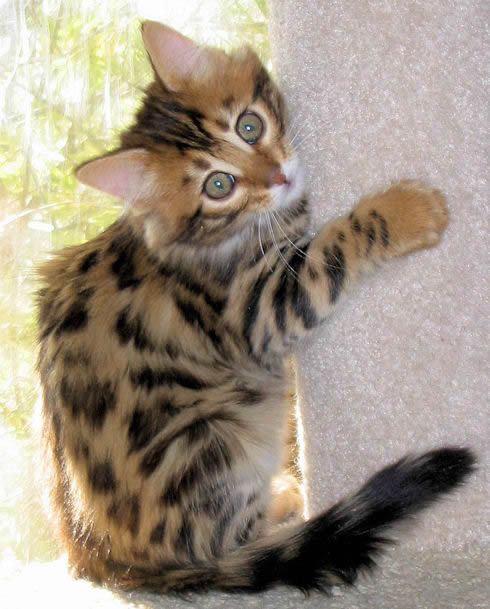
5. Brush your cat
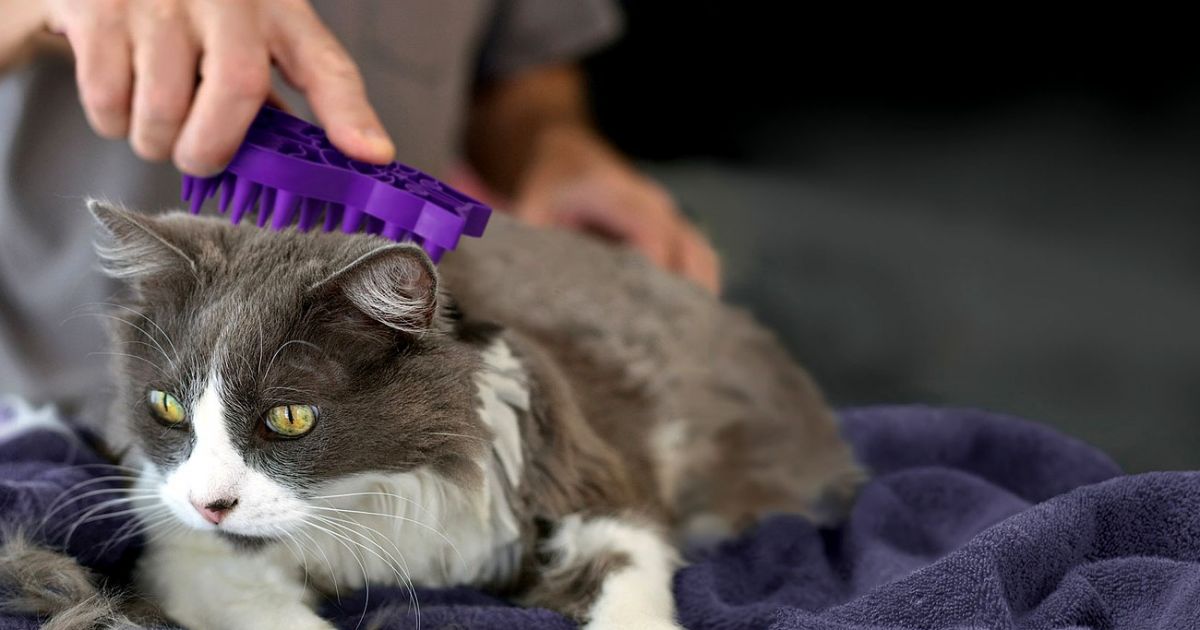
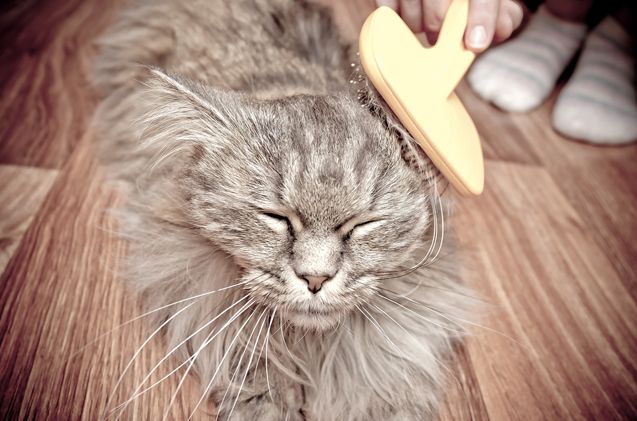
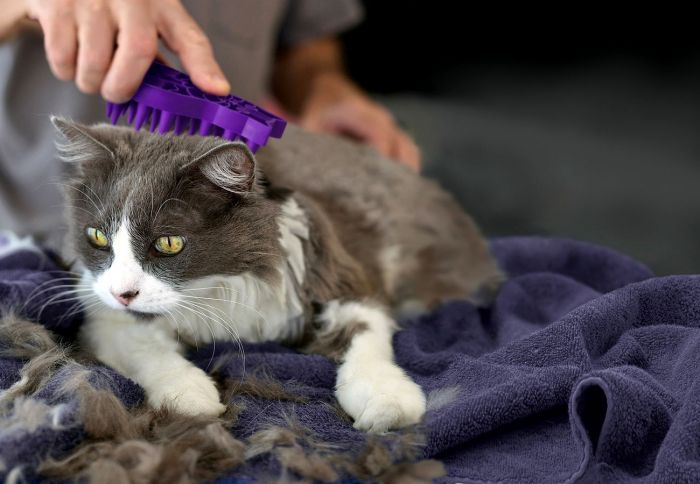
Every day, my husband, Mark, and I brush our cats, who have long cottony awn-hair coats. In fact, they insist we brush them multiple times each day. We use a bristle brush, which they love. Choosing
 a brush your cat likes is key. Our cats let us know when it's time to brush them, because they go to that same spot at the same time each day, give us that look, and meow until we brush them.
Cats groom themselves for about 10 hours each day, Miller said. So brushing your cat will reduce the amount of fur your cat ingests while grooming, which can minimize hairballs.
"Long-haired cats with an abundance of awn hair, like Persians, and other breeds generally need to be combed every day with a good stainless-steel, long-tooth comb that will go to the skin," Miller said.
The very fine, soft belly hair can be groomed with a slicker brush. If long-haired cats are not groomed regularly, they will develop mats, especially in the front armpits and in the belly area, and they will shed hair that sticks to furniture and clothes, Miller said.
6. Make a good vacuum cleaner your BFF
A good vacuum cleaner is
 essential. Many manufacturers design their vacuums with pet hair and allergens in mind. You'll want one with a HEPA filter to reduce allergens and one that excels at picking up pet hair.
Vacuum the main living area weekly, and use the attachments to go over furniture, window treatments, and car seats as needed. My husband even vacuums the cat trees on occasion.
7. Discover helpful cleaning aids
Go over wood, laminate, or tile flooring with an electrostatic or microfiber dry mop. Reach into corners where cat hair collects. Also use an electrostatic or microfiber cloth on any non-upholstered furniture.
Use Sticky Sheets on your upholstered furniture in between vacuum cleanings. Keep them on hand to
 go over cloth surfaces just before entertaining.
You can also use cleaning gloves designed to pick up pet hair on furniture and in any hard-to-reach areas where your vacuum or a Sticky Sheet cannot go
8. Save cat hair for the birds
I'm not kidding. I was surprised to see several of our Facebook fans suggest this.
"I saved the cat hair after I combed my cats," wrote Pam Kirby on our Facebook page. "I put it in a net-type onion bag.
 I tied the bag on a branch of a tree in my back yard. Birds came to the bag and removed cat hair for their spring nests. I have found old bird nests that were lined in the warm fur. Several of my neighbors have found nests in their trees with the same fur lining."
9. Love your lint roller
Use a lint roller on your clothing before going out and before washing your clothes. Get rid of as much cat hair as possible before sticking clothes in the wash, or you will end up with thousands of cat-hair beads stuck to clothing and in the washing machine.
If your clothes are covered in cat hair and it would take hundreds of lint roller sheets to de-fur them, you can put your clothes in the dryer for 10 minutes with a dryer sheet. The cat hair will end up in the dryer's lint catcher.
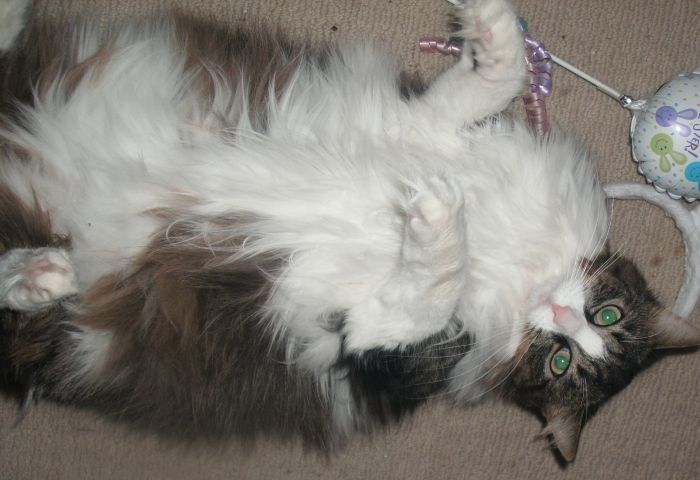
10. Knit a sweater
Just kidding. Seriously, though, if someone says something to you about being covered in cat hair, you could just wear it with pride as one Facebook fan suggests.
"I carry it with me all over me, even after I lint brush, I still have 
it these five are killing me with fur," wrote Pullena Pushy. "But I just say, ‘I'm the crazy cat lady. Of course I'm covered in fur. Be happy I'm not knitting you a cat-fur sweater ‘cause I could.'"