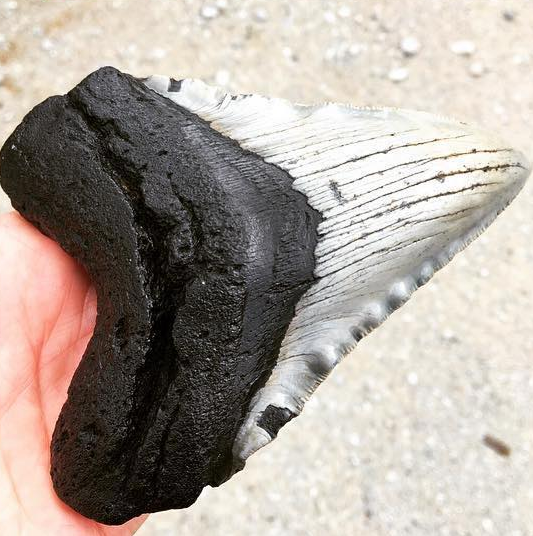
There are a lot of horrifying creatures on our planet, but they’re nothing compared to the ones that used to stalk the Earth.
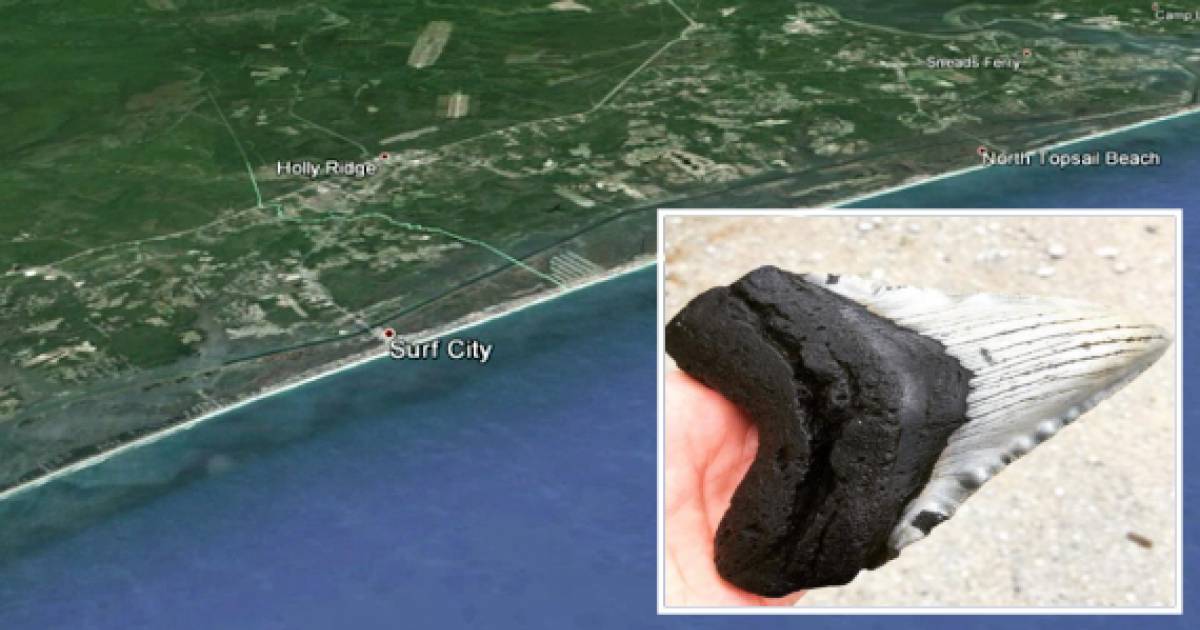
What Just Washed Up On A Beach In North Carolina Is A Terrifying Reminder
By
Editorial Staff in
Nature
On 4th July 2016
advertisement
#1 Frightening Discovery
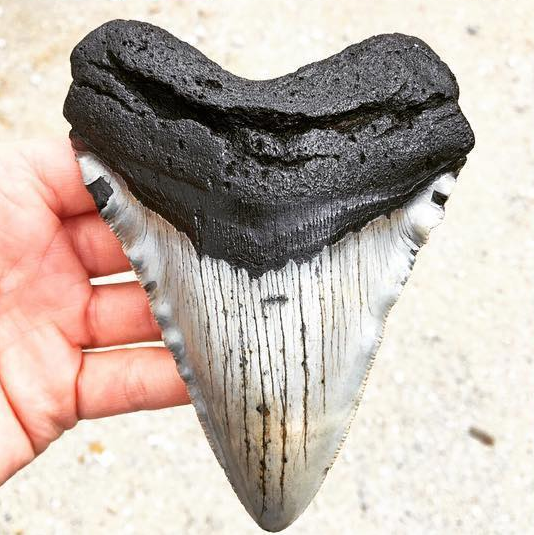
Denny Bland was on the beach in North Top Sail, North Carolina, when he made a discovery that might be nightmare fuel for some: a fossilized tooth from a prehistoric shark.
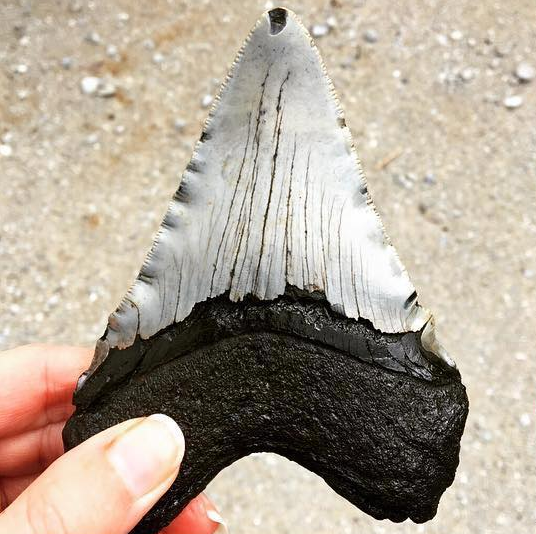
#2 Seven Inch Teeth Found
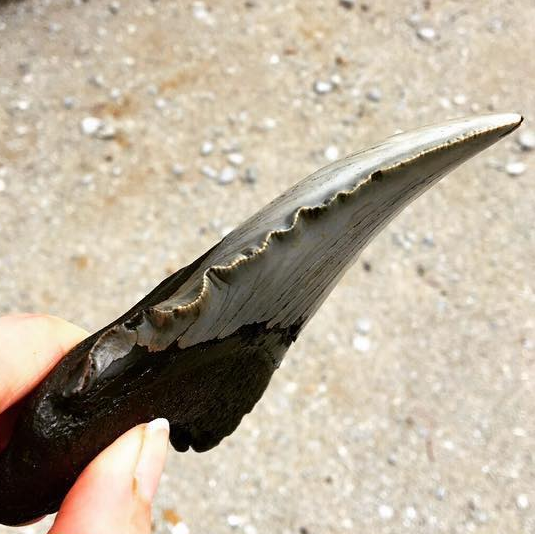
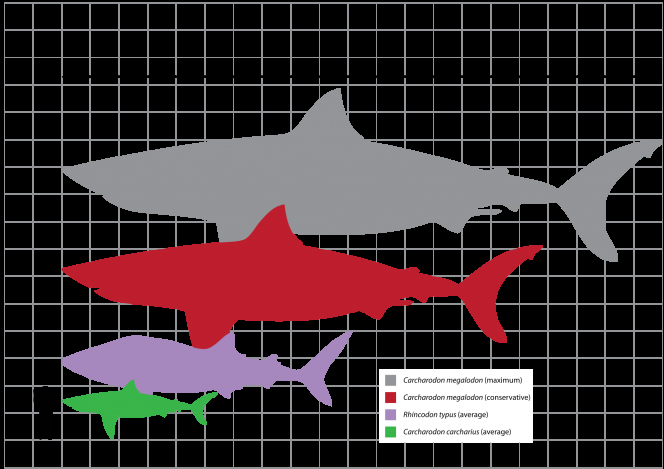
The seven-inch long tooth comes from the Megalodon, a shark-like creature estimated to be about 60 feet long. Experts say that the rain and high tides from the recent Hurricane Joaquin likely brought the teeth to the shore, where they've been found in record amounts since the start of October.
advertisement
#3 Megalodon Was One Of The Largest Predators Ever
Megalodon was this large, humongous shark that roamed the ancient seaways during the Miocene-Pliocene time mainly mid-Miocene to Pliocene which was about 15 million to 5 million years ago. The name Megalodon literally translated means "big tooth".
#4 Three Times As Big As The Great White
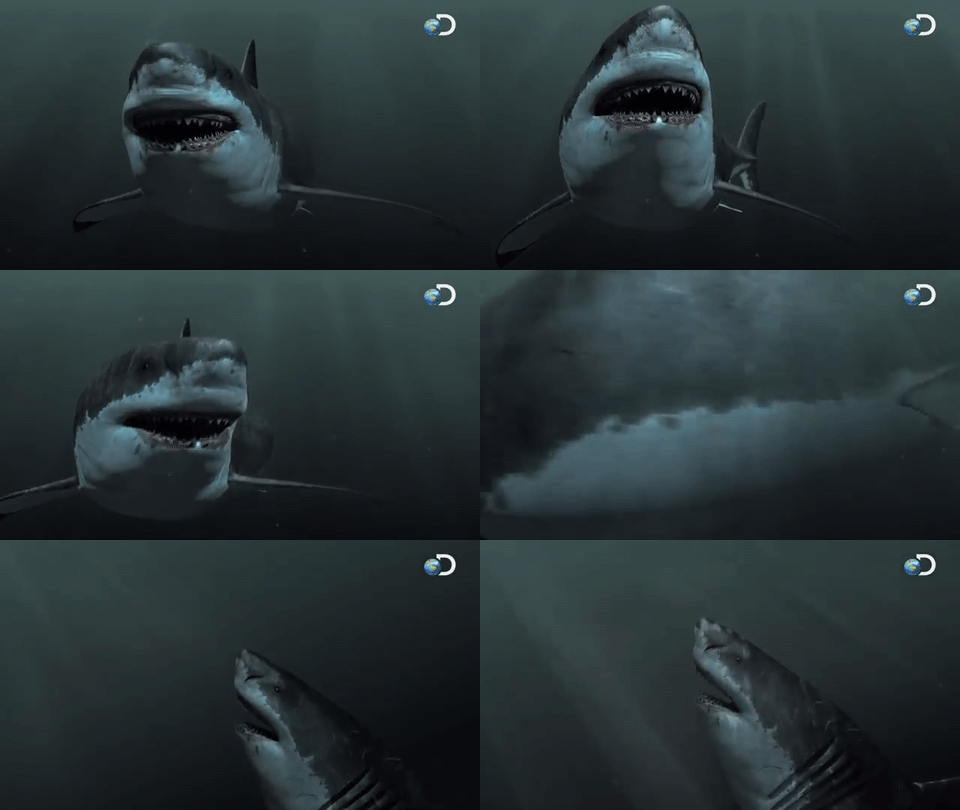
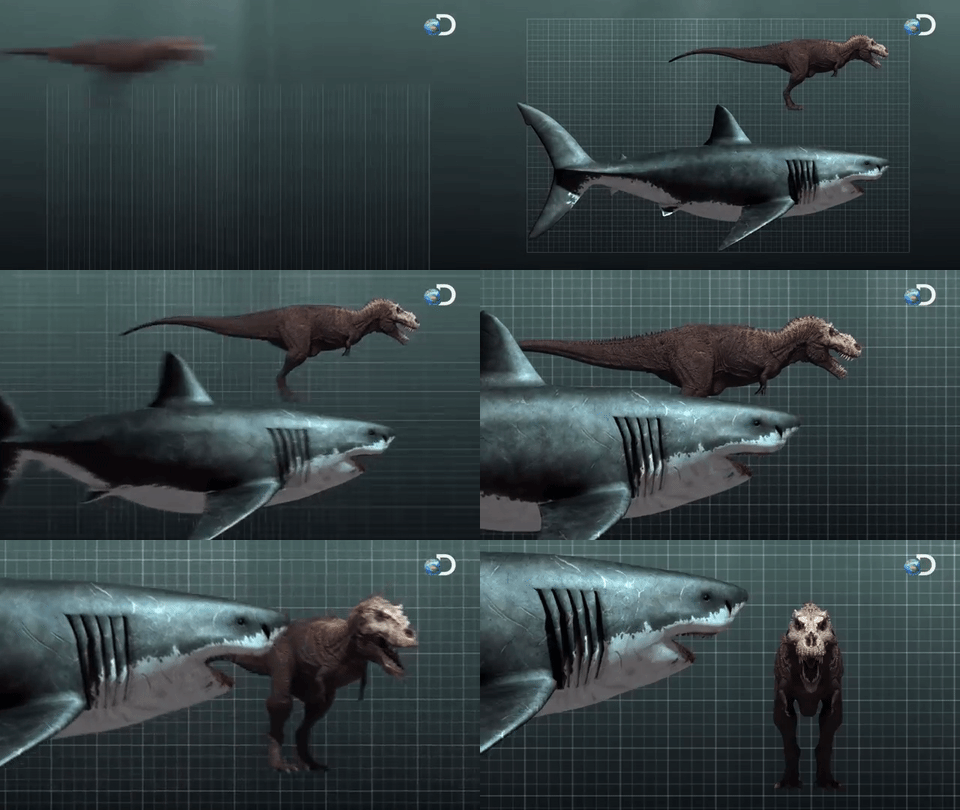
If you can't tell, the Megalodon was big really big. In fact, they made the T-Rex look minuscule. The head of a T-Rex could fit into a Megalodons mouth. The Megalodon grew up to 52 feet on average but one scientific study shows that some that swam near what is now Bermuda, averaged over 65 feet in length, roughly over three times the size of a Great White Shark.
advertisement
#5 The Most Aggressive Sea Creature To Ever Live
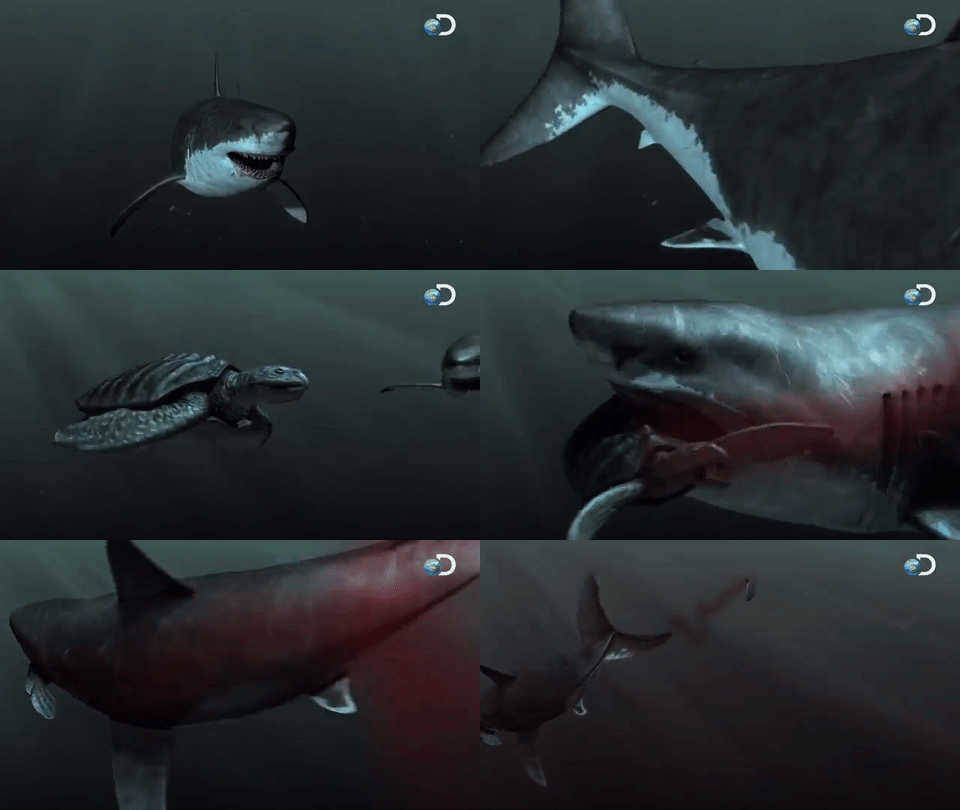
Megalodon specialized in eating whales and other large sea creatures. Over the years, many fossilized whale bones have been found with signs of bite marks from teeth that match Megalodon's massive choppers, which could grow over 7 inches in length. They basically ate everything that came into their path and had to because of their enormous size. Paleontologists have found that this "monster shark" was far more aggressive in its attack style than the great white.
advertisement
#6 Teeth Can Be Found Up To 11 Inches Long
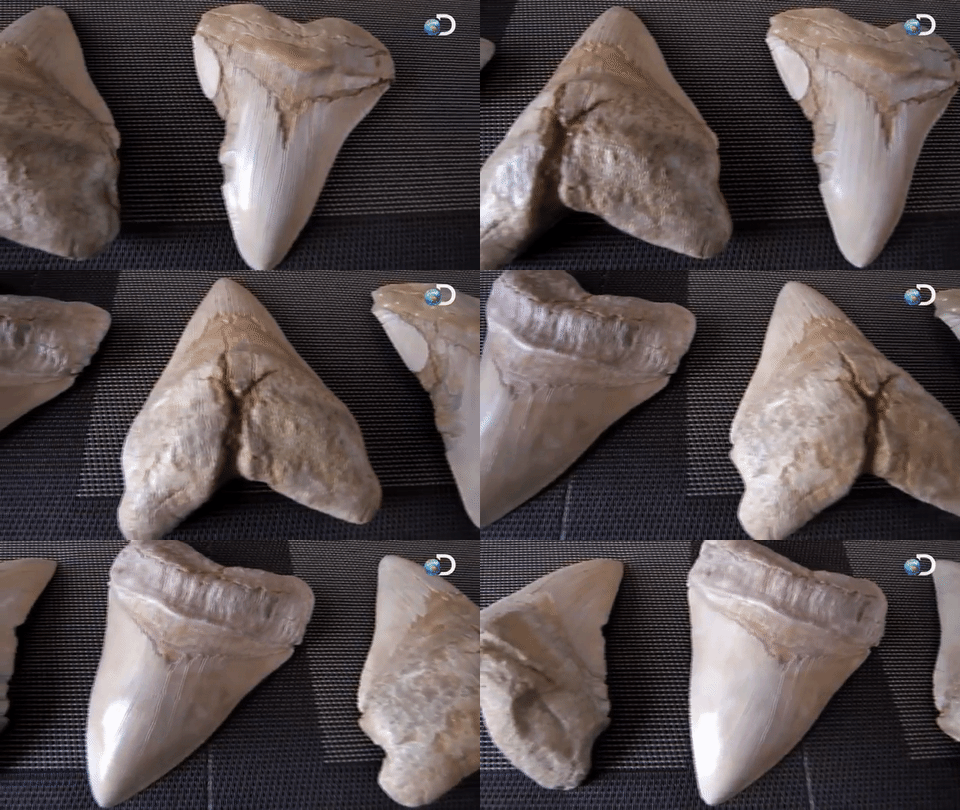
Megalodon teeth have been discovered all over the world and continue to be found to this day. For some unknown reason, they are appearing on beaches in North and South Caroline very frequently. In one day alone during October, over 60 teeth were found near a riverbed. An average tooth of the monster ranges from 6 to 11 inches in size.
The world during the time of Megalodon was slightly different than the world we know today. The oceans were warmer, and the continents were slightly closer together during the Miocene era. Coastal areas that are now dry were covered by warm, shallow seas. There was a seaway that ran between North and South America that probably allowed Megalodon greater access to the world's oceans. In fact, many Megalodon pupping grounds have been found along the areas that used to be occupied by this seaway.
advertisement
#7 They Had Special Breeding Areas
In 2009, a breeding ground for Megalodon was discovered off the coast of Panama. To date, it's only the second of its kind ever found. The Megalodon babies were two times bigger than the biggest Great White Shark. The area near Bakersfield, California was once covered in warm waters and holds the most marine fossils of anywhere in the world. The mountainous region was the hunting ground for the Megalodon and is known as 'shark tooth hill'.
advertisement
#8 No Bones Ever Found Of The Sea Creature
No skeletons of the shark have ever been found, just the teeth. Scientists are able to determine the monster's size and lifestyle based on the teeth and the location of where they are being found. The reason they have never found a skeleton of the Megalodon is because, like all sharks, the skeleton was made of cartilage. Cartilage never fossilizes. All that can be found of the Megadolon are the teeth and a few saucer sized vertebrae. What has the marine community intrigued is that the number of teeth being discovered keeps growing beyond what anyone could image. It is becoming evident that the Megalodon was more prominent on the earth than previously believed.
advertisement
#9 What Else Lurks In The Depths Of The Earth's Oceans
Less than 5% of our oceans have been explored, we honestly have no idea what could be lurking in the depths. It's very likely that these massive creatures are actually extinct, but imagine if one was found alive! Or even worse, imagine YOUR the one who finds out they are still alivein the middle of the oceanin a boat.