

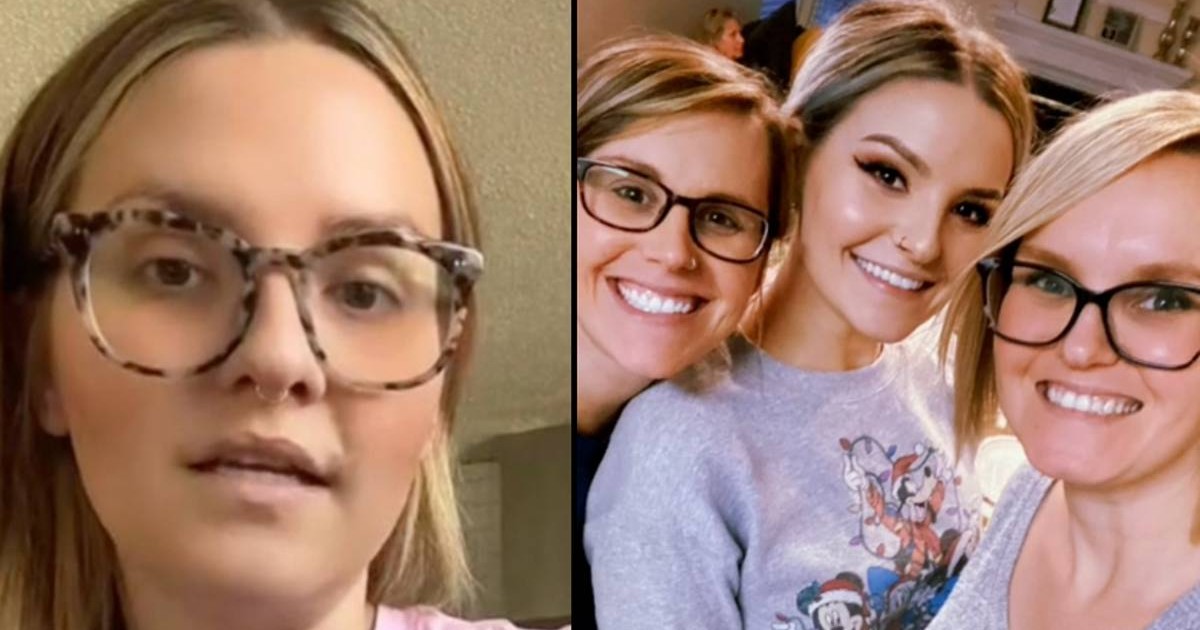
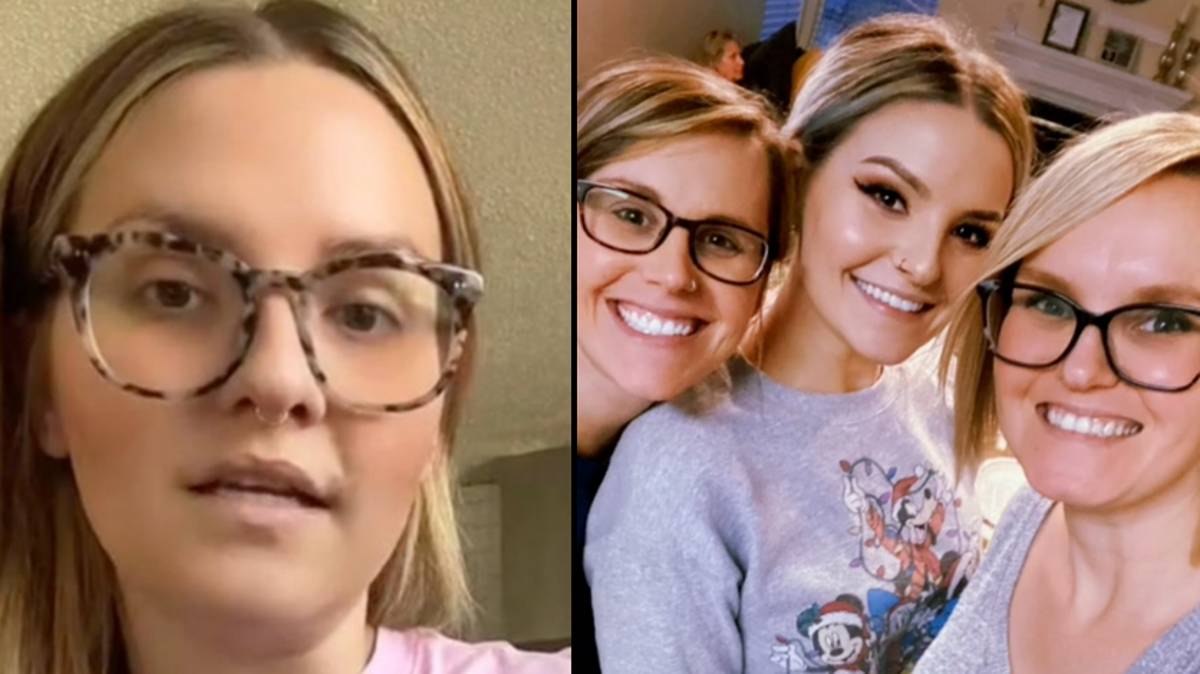
This woman shares on TikTok with her followers how she is twins to her sisters but is four years younger than them - thanks to IVF treatment. According to Shelby, in the 90s her mother went through an IVF procedure and she used some of her embryos that led to the birth of her elder twin sisters, and then a few years later she used the rest of the embryo that led to her birth.
advertisement
A woman shares how she is a triplet to her sisters despite being four years younger than her older sisters who are twins.
TikTok user @maximumstrengthpepto, aka Shelby, revealed to her followers that it all happened when her mom underwent IVF treatment in the 90s.
That time her mom used some of the embryos and gave birth to her twin sisters, Courtney and Becca - half of the embryos remained frozen.
Few years down the lane, the parents decided to have another child, despite receiving warnings of low success rates as the embryos had been frozen for so long.

TikTok/@maximumstrengthpepto
And this led to Shelby's birth. Taking to her TikTok, she told her followers: “The doctor told my mum that it would never work because they were frozen for way too long, but that ended up being me, I’m a miracle.”
This means Shelby and her sisters Becca and Courtney are fraternal twins because they were conceived at the same time.
advertisement
IVF is an in-vitro fertilization technique that is used to help those people who have fertility issues.
According to NHS website the procedure is as follows: “During IVF, an egg is removed from the woman's ovaries and fertilised with sperm in a laboratory.
“The fertilised egg, called an embryo, is then returned to the woman's womb to grow and develop.
“It can be carried out using your eggs and your partner's sperm, or eggs and sperm from donors.”

TikTok/@maximumstrengthpepto
Shanna Swan - a professor of environmental medicine and public health at Mount Sinai school of medicine in New York City - predicted that by 2045 most couples will reply on assisted reproduction.
Talking to The Guardian, she said: "It is serious. If you follow the curve from the 2017 sperm-decline meta-analysis, it predicts that by 2045 we will have a median sperm count of zero.
TikTok/@maximumstrengthpepto
advertisement
"It is speculative to extrapolate, but there is also no evidence that it is tapering off. This means that most couples may have to use assisted reproduction."
What is the reason behind low sperm counts? Swan linked it to phthalates - which are chemicals used to make plastic flexible.
These chemicals can lower testosterone levels and are very commonly used in the food production and packaging process.

TikTok/@maximumstrengthpepto
advertisement
Swan explained: “I am directly speaking to this hidden problem people don't like to talk about, which is their sub-fertility or reproductive problems, and how that is tied to the environment.
"People are recognising we have a reproductive health crisis, but they say it's because of delayed childbearing, choice or lifestyle - it can't be chemical. I want people to recognise it can.”

TikTok/@maximumstrengthpepto